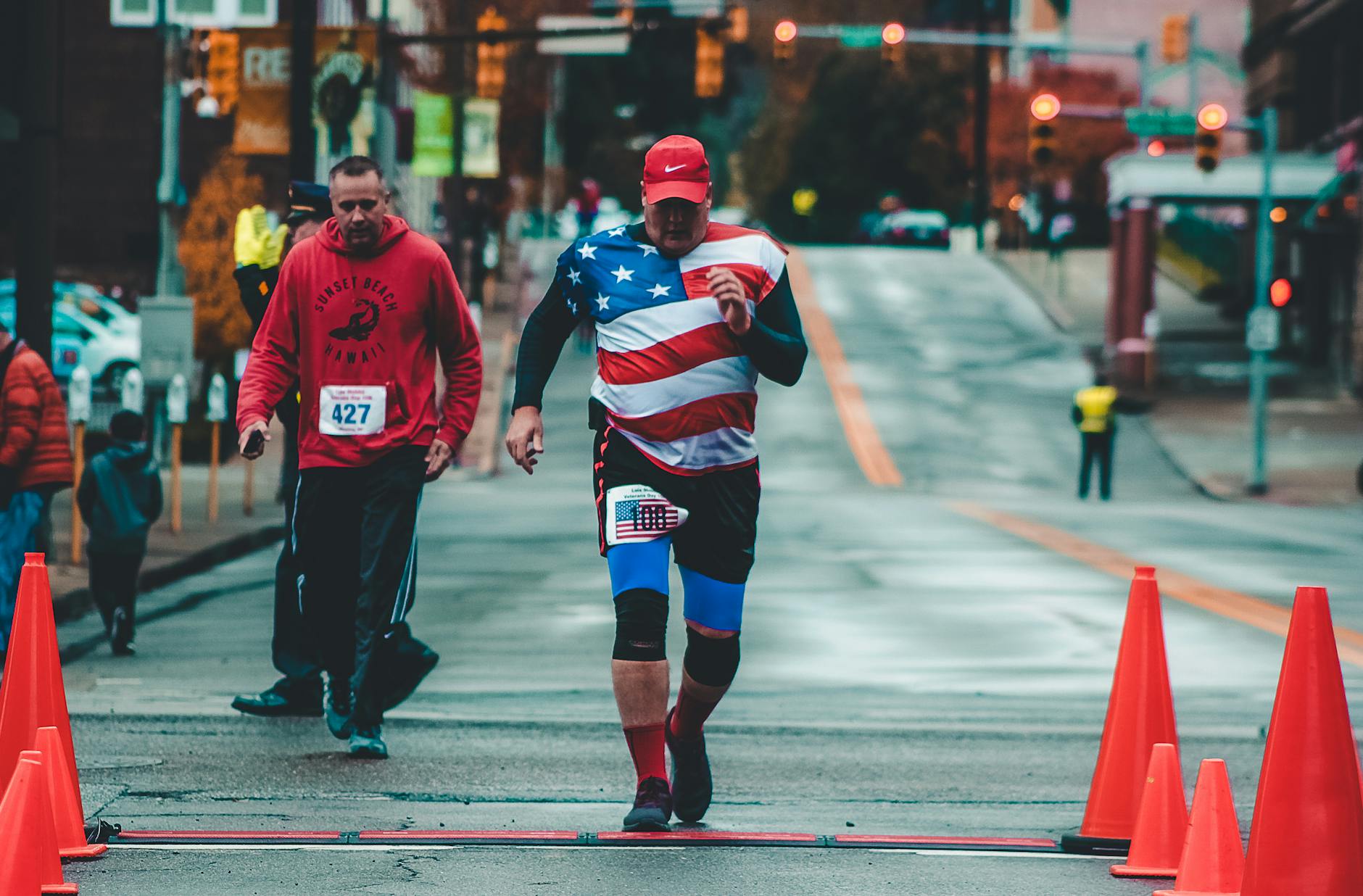
What to Wear to Physical Therapy
Wear loose athletic clothes that expose the joint being treated and shoes you can get on without bending. Your therapist needs access and range of motion, not a fashion statement. Four formulas plus the shoe and fabric picks, so you stop rethinking it every visit.


Wear loose athletic clothes that expose the joint being treated, a breathable top you can move in, and shoes you can get on without bending over. Your therapist has to see and touch the area they are working on, so shorts beat sweatpants for a knee and a front-zip top beats a pullover for a shoulder. Skip jeans, belts, and rigid waistbands. If you are coming straight from work, bring a change.
🛒 The Physical Therapy Outfit Forecast Formula



Dress code Gym casual. Nobody is judging the outfit. Access to the treated area is the only rule that matters. Key layer Whatever exposes the joint. Shorts for knee or ankle, a tank or front-zip top for shoulder, a fitted tee for lower back. Base layer Moisture-wicking knit. Clinics run 68F to 72F but you warm up fast on the bike or the table. Avoid Jeans, belts, rigid waistbands, one-piece bodysuits, compression sleeves over the treated joint. Footwear Flat, closed-toe, non-slip. Slip-on or zip-open if bending down hurts. Bring socks even in summer. Tested in Twelve weeks of outpatient shoulder rehab at a Brooklyn clinic, two visits a week, plus a summer knee block.
Physical Therapy Outfit Formulas
Pick the formula that matches the body part on the referral. The clinic is climate controlled, so a light layer handles the commute.
The Knee and Ankle Formula
Athletic shorts that hit mid-thigh, a breathable tee, crew socks, and flat sneakers. Your therapist has to watch the kneecap track when you squat and put hands on the joint line, and neither happens through a pant leg. A 5 to 7 inch inseam sits above the knee even when you are seated on a table, which is where most measurement work happens.
If you are coming from an office, zip-off pants solve it in ten seconds. It sounds fussy until the first time you try to roll a slim-fit trouser leg over a swollen knee.

Fabletics The One Short Lined 7in
A 7 inch inseam clears the knee on a treatment table, and the built-in liner means there is no second layer to peel off. Cheap enough to own three pairs for a twice-a-week block.
Shop This PickThe Shoulder and Neck Formula
A tank top or a front-opening top, plus a sports bra that fastens at the front if you wear one. The therapist needs the whole joint uncovered, including the shoulder blade behind it. A crew-neck tee gets pushed and bunched for forty-five minutes, and if your range of motion is limited, pulling one off overhead in a small changing room is its own painful exercise. If your only options are pullovers, size up one so you can get an arm out without lifting it above shoulder height.
The Back and Core Formula
A fitted tee you do not mind having lifted, plus pull-on pants or leggings with a soft waistband. Lumbar work involves pressing along the spine, so the therapist will lift the back of your shirt. A slightly fitted knit stays where it is put. A loose oversized shirt slides back down every time you move. Denim waistbands and belt buckles sit exactly where the work happens, and lying face down on a buckle for twenty minutes is miserable.
The Post-Op and Swelling Formula
Wide-leg pull-on pants, a front-opening top, and footwear that opens all the way. Swelling and a brace both change your sizing for weeks, so go one size up on the bottoms. BILLY Footwear and Zappos Adaptive build shoes that fold open flat, so you set a braced foot in and close the shoe around it rather than forcing it down into a fixed opening.
Do and Don't
- Do wear the same setup every visit once you find one that works. Removing the decision beats variety.
- Do bring a second pair of socks if any part of the session is done in socks.
- Do tie your hair back, and skip long necklaces and dangling earrings.
- Don't wear jeans, even stretch jeans. The waistband and the leg opening both work against you.
- Don't show up in a romper, bodysuit, or overalls. Getting to a knee or a spine means taking the whole thing off.
- Don't wear a compression sleeve over the joint unless your therapist told you to. They will ask you to take it off.
Best Shoes for Physical Therapy
Flat, hands-free sneakers work best when bending down is the problem. Skechers Slip-Ins use a stiffened heel counter you step into, and Nike Go FlyEase folds open at the heel. Price range: $70 to $110.
Zip-open adaptive sneakers are the answer when a brace, a boot, or swelling is in play. BILLY Footwear runs a zipper around three sides so the upper folds flat, and Silverts and Friendly Shoes make wide-opening versions with adjustable closures. Price range: $65 to $100.
Standard neutral trainers are fine for strength and gait work as long as the sole is flat rather than heavily cushioned. New Balance 574 and similar low-stack trainers keep the foot close to the floor. Price range: $80 to $130.
Avoid: thick maximal-cushion running shoes, backless slides, and anything with a raised heel. High-stack midsoles hide the exact wobble your therapist is trying to see, and open-back shoes are a fall risk on a clinic floor.
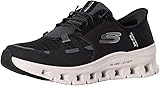
Skechers Slip-Ins Hands-Free Sneaker
Step in and go, no hands and no bending at the hip. The flat sole keeps balance drills honest in a way cushioned trainers do not.
Shop This PickMistakes People Make
- Dressing for the commute instead of the table. You are in the clinic for forty-five minutes and in the car for fifteen. Dress for the forty-five and throw a light layer over the top for the drive.
- Wearing cotton for a session that starts with cardio. Most sessions open with five to ten minutes on a bike. Cotton absorbs roughly 7 percent of its weight in moisture before it feels damp, and holds it, so you sit in a wet shirt for the rest of the hour.
- Choosing the wrong shoe for gait work. A soft, high-stack midsole absorbs the exact instability your therapist is measuring. If you are being watched walk, wear something flat.
- Forgetting that the appointment is recurring. Most courses run six to twelve weeks at two visits a week. Build a rotation of three bottoms and four tops rather than improvising each morning.
Why This Approach Works
Clinics hold a steady 68F to 72F because that is comfortable for a therapist standing all day. You will not be standing all day. Ten minutes on a bike raises core temperature about 1F to 2F and gets skin temperature climbing well before the table work starts, so the shirt that felt right in the waiting room is warm by minute fifteen. A polyester-blend knit moves that moisture to the surface where it evaporates. Cotton holds it against the skin.
Access is the other half. Manual therapy depends on feeling tissue quality and joint position directly, and goniometer readings depend on lining a device up against real landmarks like the kneecap or the shoulder blade. Every layer of fabric between a hand and a joint costs accuracy. The shorts-versus-sweatpants question is not about comfort. It is about whether the number in your chart is right.
⭐ Jordan's Pick

Outdoor Voices RecTrek Zip-Off Pant
The one piece that solves knee access without a changing room. Walk in as pants, unzip to shorts on the table, zip back on for the drive home.
Shop This PickFrequently Asked Questions
Should I wear shorts or leggings to physical therapy? Shorts, if the referral is for a knee, hip, or ankle. Leggings are fine for back, core, and upper-body work, and they read well for gait analysis because the therapist can see the whole leg line.
What should I wear to physical therapy for a shoulder? A tank top or a front-opening top, with a front-fastening bra if you wear one. The therapist needs the shoulder and the shoulder blade both uncovered, and you should not have to lift the injured arm overhead just to get changed.
Do I need to bring shoes, or do I go barefoot? Bring closed-toe sneakers. Some balance work is done barefoot or in socks, but most sessions involve walking, stepping, or bike work where shoes are required. Grip socks are worth packing if you have them.
Can I wear jeans to physical therapy? No. The waistband is rigid exactly where lower-back work happens, the leg does not roll above the knee, and denim does not stretch through the ranges you will be asked to move.
Related Guides
- What to Wear After Surgery
- What to Wear in Summer Heat With Limited Mobility
- What to Wear to Pilates
- What Is Adaptive Clothing?
- What to Wear to an MRI
- What to Wear After Shoulder Surgery
- What to Wear to a CT Scan
- What to Wear to a Mammogram
About the Author: Jordan Ellery is a weather-styling writer and former retail buyer who covers fabric science, layering systems, and adaptive dressing, where he has seen firsthand what the right clothing gives back to the people who depend on it. Read more from Jordan.
Powered by Outfit Forecast Formulas. Forecast x Occasion x Body.