What Should I Wear in the Rain?
The right rain outfit is two pieces: a sealed jacket that keeps your top half dry and footwear that does not soak through. Everything else is supporting cast.

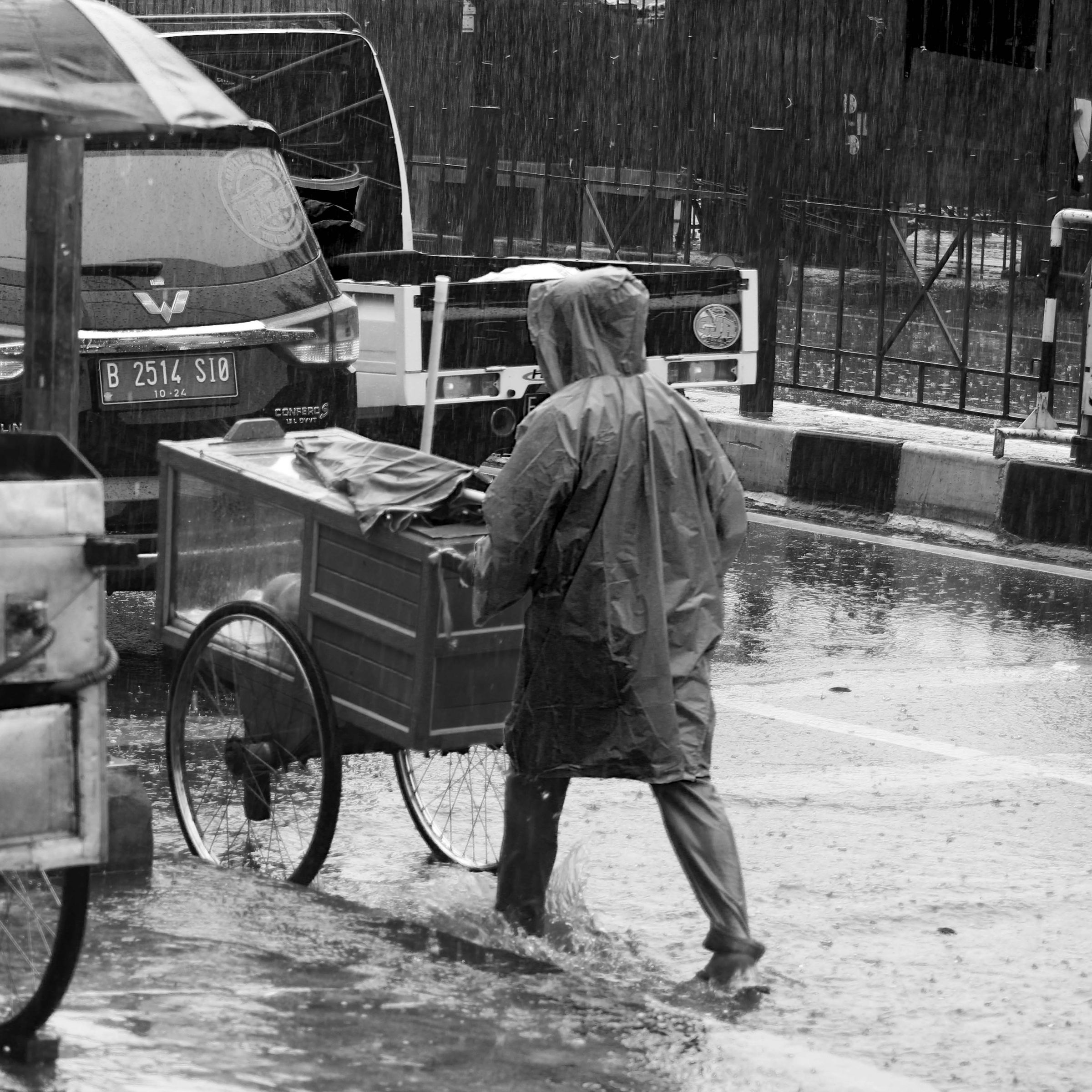
The right rain outfit is two pieces: a sealed jacket that keeps your torso dry and footwear that handles standing water. Add an umbrella only as backup, never as the primary defense. The rest is fabric choice that dries fast and pants that do not turn into wicks the moment they hit a puddle.
🛒 The Rainy Weather Outfit Forecast Formula


Temperature feel Cool and damp regardless of air temperature Key layer Sealed-seam rain jacket (2.5L or 3L) Base layer Synthetic or merino tee, no cotton Avoid Cotton hoodies, suede, denim, ankle exposure Footwear Rubber rain boots, duck boots, or waterproof leather Tested in Steady rain at 45 to 65 F across 2 hours
3 Outfit Options for Rainy Weather
1. The Everyday Errand
What you wear when the forecast is 'rain' but you still have to be out for an hour or two.
- Base: moisture-wicking tee or merino long-sleeve
- Outer: 2.5L rain jacket with sealed seams (Marmot PreCip Eco)
- Bottoms: synthetic pants or quick-dry chinos
- Shoes: duck boots or waterproof leather low-tops
- Accessories: compact windproof umbrella in the bag
2. The Heavy Downpour
When rain is steady and persistent. Step up to a 3L hardshell and rubber rain boots.
- Base: long-sleeve synthetic or wool blend
- Mid: light fleece or merino mid-layer
- Outer: 3L hardshell jacket (Patagonia Torrentshell)
- Bottoms: rain pants or quick-dry trousers
- Shoes: Hunter Original or similar rubber boot
- Accessories: waterproof tote, not a backpack with mesh panels
3. The Light Drizzle
Misty weather where you do not need full hardshell but still want a barrier.
- Base: Henley or oxford
- Outer: waxed cotton jacket, trench, or DWR-treated chore coat
- Bottoms: wool-blend trousers or technical chinos
- Shoes: Sperry Duck Boot or waterproof Chelsea
- Accessories: water-resistant cap

Marmot PreCip Eco Rain Jacket
A 2.5L sealed-seam shell at a reasonable price. The PFC-free DWR coating beads water for the first 6 months and is easy to revive with a wash-in treatment after that.
Shop This PickWhat to Wear and What to Skip
Do:
- Choose sealed seams over coated fabrics for true rain protection
- Rubber boots or waterproof leather, never canvas
- Pack a compact umbrella as the backup not the primary
- Plan for the after-walk: indoor heating fogs poorly-vented rain jackets
Skip:
- Cotton hoodies. They absorb rain, weigh 3 pounds when wet, and cool you 4x faster than air
- Suede. One 5-minute drizzle leaves permanent water marks
- Denim. Holds water against your skin for hours after you go inside
- Bare ankles. Standing water on sidewalks splashes 6 inches up your leg
Best Footwear for Rain
Rubber rain boots are the only fully waterproof option for standing water. Tall versions handle puddles past the ankle, ankle-high versions handle most urban rain. Examples include Hunter Original Tall, Bogs Classic, and Tretorn Stelt. Price range: $80 to $175.
Duck boots are the dressier compromise. Rubber lower with leather upper that handles light flooding but not full submersion. Examples include Sperry Saltwater, L.L.Bean Duck Boot, and Sorel 1964 Pac. Price range: $90 to $200.
Waterproof leather boots and shoes handle 30-minute steady rain without seeping. Look for Gore-Tex membranes or factory-sealed leather. Examples include Blundstone 550, Vasque Sundowner, and Cole Haan Originals waterproof. Price range: $180 to $400.
Hiking shoes with waterproof membranes when you need traction more than fashion. Examples include Merrell Moab 3 Waterproof, Salomon X Ultra 4 GTX, and Keen Targhee III. Price range: $130 to $220.
Avoid: Canvas sneakers, suede in any color, leather shoes without waterproofing, and any open-toe footwear. Canvas wicks water in under a minute and dries in eight hours, which means cold wet feet until you change shoes.

Hunter Original Tall Rain Boots
Vulcanized rubber with a polyester lining. Fully waterproof to the cuff and handles standing water past the ankle. The benchmark serious rain boot.
Shop This Pick5 Mistakes People Make Dressing for Rain
- Trusting an umbrella in wind: Wind above 15 mph turns most umbrellas inside out within five minutes. A jacket is the primary defense; the umbrella is a backup.
- Cotton anywhere in the outfit: Cotton holds water, loses 90 percent of its insulation value when wet, and dries in 6 to 12 hours indoors. Synthetic or merino dries in 30 to 90 minutes.
- Waterproof jacket with non-sealed seams: A coated fabric without taped seams will leak at every needle hole. Look for 'sealed seams' or 'fully seam-taped' in the spec sheet.
- Wearing the wrong shoes for the rain level: Canvas sneakers in heavy rain, rubber boots for a 5-minute drizzle. Match the footwear to the rain duration and intensity, not just whether rain is forecast.
- Forgetting the bag: A nylon backpack with mesh panels soaks through in 10 minutes. A waterproof tote, dry-bag insert, or sealed crossbody keeps your laptop and phone usable.
Why This Approach Works
The two-piece system (sealed jacket plus waterproof footwear) handles 95 percent of urban rain scenarios. A modern 2.5L jacket has a hydrostatic head rating of 10,000 to 20,000 mm, meaning the fabric resists pressure equivalent to a 10-meter column of water before leaking. That covers steady rain for an hour, light rain for half a day.
Footwear matters because the foot is the part of the body that contacts standing water. Rubber rain boots have a hydrostatic head approaching infinite, since rubber does not absorb water at all. Duck boots and waterproof leather use a different model: factory-sealed seams and DWR-treated upper that handles splashes but not submersion.
The cotton problem is fabric physics. Cotton's hollow fiber structure absorbs roughly 25 times its weight in water. Wet cotton conducts heat away from your body at 25 times the rate of dry cotton, which is why rain on a cotton hoodie chills you fast. Synthetic and merino both shed water and continue to insulate while wet.
⭐ Jordan's Pick
Marmot PreCip Eco Rain Jacket
The PreCip Eco is the most cost-effective sealed-seam rain jacket on the market. Light enough to pack, durable enough for daily commuting, and the PFC-free coating performs well for the first 6 to 12 months.
Shop This PickFrequently Asked Questions
Are jeans okay to wear in the rain?
Jeans are one of the worst things to wear in real rain. Denim absorbs water at about ten times its dry weight, takes hours to dry, and gets uncomfortably cold against your legs as it stays wet. Light drizzle for a short walk is fine, but if you'll be outside for more than fifteen minutes in steady rain, switch to nylon hiking pants, treated chinos, or anything with a tighter weave than denim.
Do I need waterproof shoes for light rain?
For light rain on city pavement during a short outing, water-resistant leather or treated suede is usually enough. Properly cared-for full-grain leather can handle thirty minutes of light rain without damage. For sustained rain, walking through wet grass, or rain longer than an hour, you want actual waterproof footwear with sealed seams. The middle ground is a pair of leather Chelseas treated with mink oil or Otter Wax.
What is the difference between waterproof and water resistant?
Waterproof means rated to keep out water under pressure, typically measured in millimeters of hydrostatic head. Anything 10,000mm or higher will keep you dry in heavy sustained rain. Water resistant means treated against light moisture, usually a DWR coating that beads water for a while before saturating. DWR wears off over six to twelve months and needs reapplication. If you need the difference to matter, you need waterproof.
Can I wear leather in the rain?
Full-grain leather handles incidental rain well if you keep it conditioned. Pre-treat with mink oil, beeswax, or Otter Wax before the season, and reapply every couple of months during wet weather. Avoid suede in real rain because the nap absorbs water and stains permanently. Patent leather and pebbled leather both handle rain fine. The key is drying leather slowly at room temperature when it gets wet, never near a heat source.
Related Guides
- What to Wear in 40F Rain
- What to Wear in 50F Rain
- What to Wear in 60F Rain
- What to Wear in 80F Humid Weather
- What to Wear in 68 Degree Windy Weather
Powered by Outfit Forecast Formulas. Forecast x Occasion x Body.