What to Wear in 50 Degree Rainy Weather


Rain at 50°F is genuinely cold. Not "I wish I had a jacket" cold, but "I can't feel my fingers after 15 minutes" cold. Water on your skin accelerates heat loss by 25x compared to dry air, so 50°F rain feels more like 42°F. You need a fully waterproof outer layer with sealed seams (not water-resistant, waterproof), a moisture-wicking base layer that stays warm when damp, and absolutely zero cotton anywhere on your body.
Temperature feel: 42-50°F (rain creates significant evaporative cooling, wind makes it worse) Key layer: Waterproof shell with sealed seams, minimum 10K mm waterproof rating Base layer: Merino wool or synthetic moisture-wicking long sleeve Avoid: Cotton in any layer, suede shoes, "water-resistant" jackets without sealed seams Footwear: Waterproof leather boots or Gore-Tex shoes Tested in: NYC, 48°F with steady rain, 20-minute walk from Penn Station to Flatiron
4 Outfit Options for 50°F Rainy Weather
Formula 1: The Commuter Shield Your daily setup for getting to and from work in cold rain without arriving soaked or frozen. This is what I wear most rainy fall mornings. - Base: Merino wool long-sleeve crew in 150-200 weight (Smartwool Merino 250 at $85, Icebreaker Oasis at $90) - Mid layer: Lightweight fleece quarter-zip or thin down vest (Patagonia Better Sweater at $139, Arc'teryx Atom LT Vest at $200) - Outer: Hardshell rain jacket with sealed seams, minimum 10K waterproof rating (Arc'teryx Zeta SL at $350, Marmot Minimalist at $200, The North Face Venture 2 at $100) - Bottoms: Water-resistant chinos or technical pants in dark colors (Outlier Slim Dungarees at $198, Western Rise AT Slim at $128, because DWR-treated fabric beads water for the first 20-30 minutes) - Shoes: Waterproof leather boots or Gore-Tex sneakers (Blundstone 500 at $200, Salomon X Ultra Gore-Tex at $140) - Accessories: Compact umbrella (always carry one as backup), waterproof watch strap
Formula 2: The Office Arrival You need to look professional after walking through cold rain. The strategy: protect the outfit underneath. - Base: Merino wool undershirt, crew neck (Uniqlo Heattech Extra Warm at $20, Wool&Prince Merino Tee at $72) - Mid layer: Oxford cloth button-down or merino sweater (Brooks Brothers OCBD at $90, Everlane Cashmere Crew at $100) - Outer: Waterproof trench coat or long rain jacket that covers to mid-thigh (Stutterheim Stockholm at $295, Rains Long Jacket at $135) - Bottoms: Wool-blend trousers in charcoal or navy (J.Crew Ludlow Wool at $128, Bonobos Stretch Wool Dress Pant at $150, because wool retains warmth even when slightly damp, unlike cotton chinos) - Shoes: Waterproof Chelsea boots (Blundstone Dress at $220, Thursday Boot Co. Duke at $200) - Accessories: Packable umbrella, spare socks in your bag (seriously, wet socks destroy your whole day)
Formula 3: The Weekend Casual Saturday errands, coffee runs, the farmers market in drizzle. You're outside intermittently for 2-3 hours. - Base: Heavyweight merino long-sleeve or waffle-knit thermal (Smartwool Merino 250 at $85, Pistol Lake Eudae Henley at $78) - Mid layer: Fleece pullover or quilted vest (Patagonia Synchilla Snap-T at $119, Barbour Liddesdale at $230) - Outer: Waxed cotton jacket or waterproof parka (Barbour Bedale at $400, Filson Short Cruiser at $395) - Bottoms: Dark wash jeans or lined canvas pants (Levi's 511 in rigid dark at $70, Flint and Tinder Lined Waxed Trucker Pant at $148) - Shoes: Waterproof hiking boots or leather work boots (Danner Trail 2650 GTX at $170, Red Wing Moc Toe at $300) - Accessories: Beanie or wool cap, waterproof gloves if wind is present
Formula 4: The Evening Out in Rain Dinner plans in cold rain. You want to look sharp but can't show up shivering and dripping. - Base: Merino wool crewneck undershirt (Wool&Prince at $72) - Mid layer: Merino turtleneck or heavyweight knit sweater (Todd Snyder Merino Turtleneck at $198, J.Crew Cashmere Crew at $128) - Outer: Dark waterproof overcoat or treated wool topcoat (Mackintosh at $800, Norwegian Rain at $650, or more affordably, Rains Long Jacket at $135) - Bottoms: Wool trousers in charcoal or dark navy (Theory Mayer at $265, Bonobos Wool Dress Pant at $150) - Shoes: Waterproof leather Chelsea boots, polished (RM Williams Comfort Craftsman at $500, Thursday Duke at $200) - Accessories: Dark umbrella (it's an accessory tonight, not just utility), leather gloves

What to Avoid in 50°F Rainy Weather
Do: - Verify your jacket has sealed seams by checking the inside of the shoulder and armpit seams for taped strips, because unsealed seams let water through within 5-10 minutes of steady rain - Layer merino wool against your skin as your first layer, since it retains 80% of its insulating value when wet compared to cotton's near-zero retention - Waterproof your shoes with spray or wax at least 24 hours before rain, because DWR coatings need time to bond with the material - Bring backup socks in a ziplock bag, because wet feet in 42°F effective temperature can lead to blisters and numbness in under 30 minutes
Don't: - Wear cotton as a base layer, because cotton loses virtually all insulating value when wet, absorbs 27x its weight in water, and takes 3-5 hours to dry at 50°F, meaning you'll be cold all day once it's soaked - Trust "water-resistant" labels without checking the waterproof rating, since water-resistant typically means a DWR coating that fails after 10-15 minutes of steady rain, while true waterproof (10,000mm+ rating with sealed seams) handles hours - Wear suede shoes of any kind, because rain permanently damages suede by causing water stains, warping the nap, and weakening the material structure - Skip the mid layer thinking your rain jacket is enough, since a waterproof shell provides zero insulation on its own, and at 42°F effective temperature you need that insulating layer between your base and your shell
Best Shoes for 50°F Rainy Weather
Waterproof leather boots works well for All-day reliability, commuting. Examples include Blundstone 500, Thursday Captain, Red Wing Blacksmith. Price range: $150-350.
Gore-Tex sneakers works well for Shorter exposure, casual settings. Examples include Salomon X Ultra GTX, Adidas Terrex Free Hiker GTX. Price range: $130-200.
Waterproof Chelsea boots works well for Office, evening, dressed-up rain. Examples include Blundstone Dress, RM Williams, Thursday Duke. Price range: $150-500.
Rubber rain boots works well for Heavy downpours, standing water. Examples include Hunter Original, Bogs Classic. Price range: $80-160.
Avoid: Avoid. Any rainy day at 50°F. Examples: Suede anything (permanent damage), canvas sneakers (soak through in 3 minutes), leather without waterproofing (wet leather cracks as it dries).

Mistakes People Make in 50°F Rainy Weather
1. Confusing water-resistant with waterproof This is the most expensive mistake in rain dressing. "Water-resistant" means the fabric has a DWR (durable water repellent) coating sprayed on the surface. It beads water for about 10-15 minutes of light rain, then saturates. "Waterproof" means the fabric itself blocks water through a membrane (like Gore-Tex) or laminate, and the seams are heat-sealed so water can't sneak through the stitching holes. In steady 50°F rain, a water-resistant jacket will be soaked through in 20 minutes. I learned this during a November walk across the Brooklyn Bridge. Never again.
2. Wearing any cotton layer against skin Cotton is the single worst fabric choice for cold rain. When cotton gets wet, its fibers swell and hold water against your skin. That trapped moisture then draws heat away from your body through conduction, which is 25x more efficient than convective heat loss through dry air. In practical terms: a wet cotton shirt in 50°F rain will make you feel like it's in the mid-30s. Merino wool, by contrast, maintains warmth even at 30% moisture saturation because its fibers trap insulating air pockets even when wet.
3. Wearing the right jacket but wrong pants People waterproof their upper body and completely ignore their legs. Standard chinos or jeans absorb rain quickly, and wet fabric against your thighs in 42°F effective temperature is deeply uncomfortable. The fix doesn't require rain pants (unless it's truly torrential). Water-resistant technical chinos with DWR coating handle 20-30 minutes of rain. For longer exposure, pack lightweight rain pants that pull on over your regular pants.
4. Forgetting about the 20-minute rule Most people check rain forecasts but don't think about total exposure time. A 5-minute walk to the car? Almost anything works. A 20-minute walk to the office? Every gear decision matters. At 50°F in steady rain, you'll start feeling genuinely cold after about 12 minutes in inadequate gear. By 20 minutes, your hands are numb and your mood is destroyed. Plan your layers for your longest outdoor stretch, not your shortest.
5. Neglecting the feet-up approach Cold rain puddles are everywhere, and water wicks up fabric. If your shoes aren't waterproof, water enters from below. Then your socks get wet. Then your feet get cold. Then every step is miserable for the rest of the day. Waterproofing starts at the ground and builds up. Get the shoes right first, then worry about the jacket.
Why This Works
Evaporative cooling makes 50°F rain much colder than it looks When rain lands on your clothing and skin, it evaporates (if fabric allows it) and pulls heat energy away with it. This is the same principle behind sweat cooling you down, except you didn't ask for it and can't stop it. At 50°F, this evaporative effect can lower your perceived temperature by 6-8°F. Add wind at even 10 mph and you're looking at a wind chill that pushes effective temperature into the low 40s. A waterproof shell stops this cycle by preventing water from reaching your insulating layers, keeping the evaporative cooling on the outside of your system instead of against your body.
Sealed seams are the difference between dry and disaster Every stitch hole in a jacket is a potential entry point for water. Under pressure, like heavy rain hitting your shoulders or water pooling at your collar, unsealed seams leak. Factory-sealed seams use heat-applied tape to cover every stitch line on the interior of the jacket. You can check for this yourself: flip your rain jacket inside out and look at the shoulder seams and underarm seams. If you see a smooth strip of tape covering the stitching, your seams are sealed. If you see exposed thread, water will find its way through within 10-15 minutes of steady rain.
Frequently Asked Questions
How do I know if my rain jacket is actually waterproof? Check the inside seams for heat-sealed tape and look for a waterproof rating on the label or product page. Anything rated 10,000mm or higher with sealed seams qualifies as waterproof. Most reliable brands list this spec clearly. If the label only says "water-resistant" or "DWR coated" without a millimeter rating, it's not waterproof.
Can I wear a down jacket under my rain shell? Yes, but only if your rain shell keeps the down completely dry. Down loses nearly all its insulating ability when wet, collapsing from fluffy loft to flat, useless clumps. If your shell is truly waterproof with sealed seams, down works beautifully as a mid layer because it's incredibly warm for its weight. If there's any chance of leakage, use synthetic insulation (like PrimaLoft) instead, which retains 90%+ of its warmth when damp.
Should I carry an umbrella or just rely on my jacket? Both. An umbrella keeps rain off your face, bag, and phone, and reduces the total water load hitting your jacket. Your jacket is the failsafe for wind-blown rain and the moments you can't hold an umbrella. Relying on only one or the other leaves gaps. A compact umbrella weighs 8-12 ounces and fits in any bag.
What about waterproof sneakers? Are they good enough? For walks under 20 minutes in light to moderate rain, Gore-Tex sneakers work fine. For steady rain, standing water, or walks over 20 minutes, boots are better. Sneakers sit low and water can enter over the collar. Boots with a higher shaft keep water out more reliably and provide better insulation around your ankle, which is a significant heat-loss zone.
⭐ Jordan's Pick
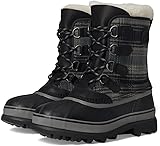
Sorel Caribou Boot
Waterproof full-grain leather with removable felt liner for genuine cold.
Shop This Pick