What to Wear in 60 Degree Rainy Weather
Wear a waterproof shell over a fleece or wool mid-layer with chinos and waterproof footwear. Sixty-degree rain sounds warm but drops effective temperature into the 40s. Four waterproof-plus-layer formulas plus the rain shell and mid-layer picks.

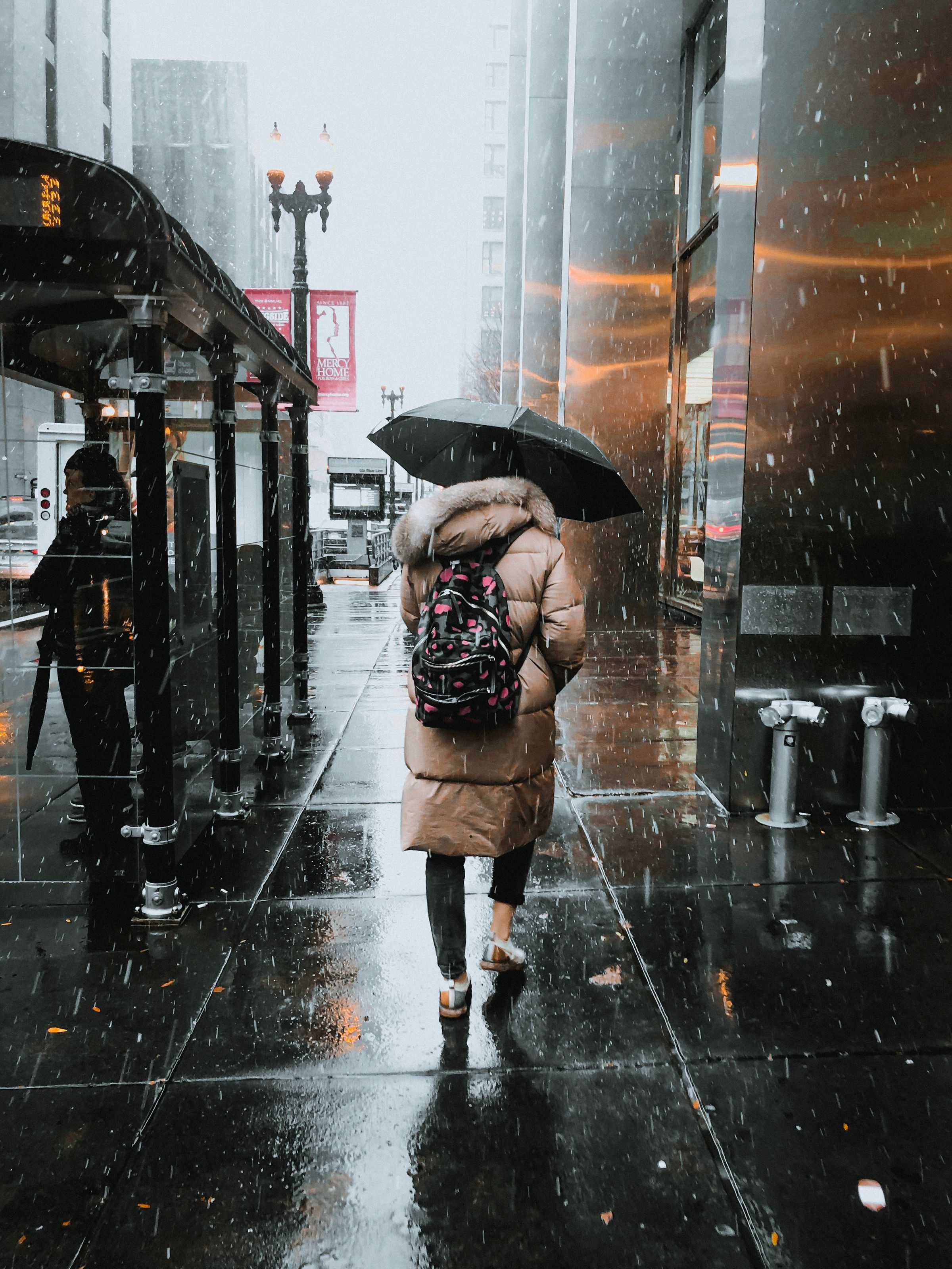
Outfit Forecast calls sixty-degree rain the temperature that tricks people, warm enough to skip real waterproofing but cold enough to regret it.
Temperature feel: 52-60°F depending on rain intensity and wind (steady rain pushes toward 52°F, light intermittent showers stay closer to 57-58°F) Key layer: Lightweight waterproof shell or packable rain jacket Base layer: Long-sleeve merino or moisture-wicking synthetic tee Avoid: Cotton hoodies, canvas sneakers, suede, open-toe shoes Footwear: Waterproof boots or Gore-Tex sneakers Tested in: Brooklyn, 61°F with intermittent showers, 2 hours of afternoon errands on foot
🛒 The 60 Degree Rainy Weather Outfit Forecast Formula


Temperature feel 54-62°F with rain making it feel 5-8° cooler Key layer Waterproof shell or rain jacket with sealed seams Base layer Moisture-wicking mid-layer, not cotton Avoid Suede, untreated leather, heavy knits that absorb water Footwear Waterproof boots or treated leather shoes Tested in Pacific Northwest and Northeast, spring rainy season
4 Outfit Options for 60°F Rainy Weather
Formula 1: Light Rain Prep (Showers in the Forecast) The forecast says 40% chance of rain and you'll be in and out of buildings all day. You need protection that packs away when the sun comes back. - Base: Merino wool long-sleeve tee or lightweight waffle-knit thermal (Smartwool Merino 150 at $70, Pistol Lake Eudae at $78) - Mid layer: Light crewneck fleece or thin quarter-zip (Uniqlo Fluffy Fleece at $30, Patagonia Better Sweater Quarter-Zip at $139) - Outer: Packable rain jacket, stashes into its own pocket when dry (Patagonia Torrentshell 3L at $160, The North Face Venture 2 at $100, Outdoor Research Helium at $160) - Bottoms: Dark slim-fit jeans or DWR-treated chinos (Levi's 511 in dark wash at $70, Outlier Slim Dungarees at $198, because DWR coating handles light rain for 15-20 minutes before saturating) - Shoes: Gore-Tex sneakers or waterproof leather boots (Salomon X Ultra GTX at $140, Blundstone 500 at $200) - Accessories: Compact umbrella in bag, light merino beanie if wind is expected
Formula 2: All-Day Rain Setup Steady rain from morning through evening. No breaks. You need full waterproof commitment. - Base: Merino long-sleeve crew, 200 weight (Icebreaker Oasis at $90, Smartwool Merino 250 at $85) - Mid layer: Fleece vest or lightweight insulated jacket (Arc'teryx Atom LT Vest at $200, Patagonia Nano Puff at $200) - Outer: Waterproof shell with sealed seams and hood (Arc'teryx Zeta SL at $350, Marmot Minimalist at $200) - Bottoms: Water-resistant technical pants in dark color (Western Rise AT Slim at $128, Ministry of Supply Velocity at $135) - Shoes: Waterproof Chelsea boots or hiking boots (Blundstone 500 at $200, Danner Trail 2650 GTX at $170) - Accessories: Waterproof bag or pack cover, spare socks (always)
Formula 3: Dressed-Up Rain Outfit Dinner, a show, meeting friends somewhere nice. You need to arrive looking like you weren't just standing in rain for 10 minutes. - Base: Merino wool undershirt (Uniqlo Heattech at $15, Wool&Prince at $72) - Mid layer: Fine-gauge merino crewneck sweater or lightweight turtleneck (Todd Snyder Merino Crewneck at $168, J.Crew Cashmere at $128) - Outer: Waterproof trench coat or long rain jacket, dark navy or black (Rains Long Jacket at $135, Stutterheim Stockholm at $295) - Bottoms: Wool-blend trousers, charcoal or navy (Theory Mayer at $265, J.Crew Ludlow at $128, because wool insulates when damp and drapes well even in moisture) - Shoes: Waterproof leather Chelsea boots, polished (Thursday Duke at $200, Blundstone Dress at $220) - Accessories: Full-size umbrella (compact ones look out of place with dressed-up outfits and cover less area), leather gloves if temperature dips toward 55°F
Formula 4: Active Errands in Rain You're moving: grocery runs, dog walks, weekend tasks. You'll generate body heat but you'll also be stopping and starting, which means cooling down repeatedly. - Base: Synthetic moisture-wicking long-sleeve (Nike Dri-FIT Long Sleeve at $40, Under Armour Tech at $30) - Mid layer: Lightweight fleece pullover, half-zip for venting (Patagonia R1 Air at $149, REI Co-op Trailmade at $60) - Outer: Waterproof rain jacket with pit zips for ventilation (Outdoor Research Foray at $200, Marmot PreCip Eco at $100) - Bottoms: Quick-dry hiking pants or joggers (prAna Stretch Zion at $85, Vuori Meta Jogger at $98) - Shoes: Waterproof trail runners or hiking shoes (Merrell Moab 3 GTX at $145, Salomon X Ultra 4 GTX at $140) - Accessories: Baseball cap under your hood (keeps rain off your face better than a hood alone), waterproof phone case

What to Avoid in 60°F Rainy Weather
Do: - Wear a proper rain jacket even if the forecast says "light showers," because light rain for 2 hours soaks you just as thoroughly as heavy rain for 20 minutes - Layer a moisture-wicking base under a light insulator under your shell, since this three-layer system lets you vent if you warm up without losing rain protection - Choose dark-colored bottoms, because rain splashback from sidewalks creates visible dirt marks on lighter fabrics within 10 minutes of walking - Bring a compact umbrella even with a rain jacket, since it protects your face, bag, and any exposed areas your jacket doesn't cover
Don't: - Wear a cotton hoodie as your rain layer, because cotton absorbs up to 27x its weight in water, and a soaked hoodie at 60°F rain (effectively 52-55°F) will pull heat from your core through conduction, leaving you colder than if you wore nothing over your base layer - Choose canvas sneakers or Converse, since canvas fabric soaks through in under 3 minutes of rain and takes 8+ hours to fully dry, meaning your feet will be cold and wet for the rest of your day - Wear suede shoes or boots, because water permanently damages suede by staining it, warping the nap, and weakening the fiber structure even after drying - Assume 60°F is warm enough to skip the mid layer, since once rain cools you to 52-55°F effective temperature and you're standing still waiting for a bus or train, that single tee under a shell won't cut it
Best Shoes for 60°F Rainy Weather
Waterproof leather boots works well for Commuting, all-day rain, dressed-up. Examples include Blundstone 500, Thursday Captain, Dr. Martens 1460 WP. Price range: $150-300.
Gore-Tex sneakers works well for Lighter rain, shorter exposure, casual. Examples include Salomon X Ultra GTX, Adidas Terrex Free Hiker GTX. Price range: $130-200.
Waterproof Chelsea boots works well for Office, evening, smart casual. Examples include Thursday Duke, Blundstone Dress, RM Williams. Price range: $150-500.
Waterproof trail runners works well for Active errands, dog walking, outdoor tasks. Examples include Merrell Moab 3 GTX, Salomon Speedcross GTX. Price range: $120-160.
Avoid: Avoid. Any rainy day. Examples: Open-toe shoes (cold, wet feet in under 5 minutes), canvas sneakers (soak through immediately), untreated leather (absorbs water and cracks when drying), suede (permanently damaged by water).

Mistakes People Make in 60°F Rainy Weather
1. Thinking 60°F rain is "warm rain" This is the biggest mistake and I see it constantly. People hear "60 degrees" and think spring. They grab a light jacket, maybe a cotton flannel, and head out. Then rain drops the effective temperature to the low 50s and suddenly they're shivering at an outdoor restaurant, wondering why they're so cold. I did this exact thing during an April afternoon in Williamsburg. It was 61°F when I left, intermittent rain started around 2pm, and by 3:30 I was genuinely uncomfortable in a cotton overshirt. Sixty degrees without rain is pleasant. Sixty degrees with rain is a different season entirely.
2. Wearing a "water-resistant" jacket for all-day rain A DWR-coated jacket works for about 15 minutes of light rain. After that, the coating saturates and water starts soaking through. For a quick dash from your car to a restaurant, water-resistant is fine. For any outdoor exposure over 20 minutes in steady rain, you need a fully waterproof shell with sealed seams and a waterproof rating of 10,000mm or higher. Check the inside seams of your jacket: if you see tape covering the stitch lines, your seams are sealed. If you see exposed thread, rain will find every one of those needle holes.
3. Going sockless or wearing cotton socks Your feet are the first casualty in rain. Cotton socks absorb water, hold it against your skin, and create blisters through friction on wet surfaces. Merino wool socks (Darn Tough, Smartwool) cost $15-22 per pair and maintain insulation at 30% moisture saturation. That means even if some water enters your shoes, merino keeps your feet warmer than cotton socks that are totally dry. The math is clear on this one.
4. Underdressing because "I'll just be outside for a minute" Rain plans change. You're "just running to the store" and then you realize you need something else two blocks over, and then your friend calls and wants to grab coffee, and now you've been outside for 40 minutes in a tee and a denim jacket. Always dress for the possibility of extended outdoor time. A packable rain jacket weighs 8-12 ounces and fits in any bag. There's no excuse not to have one.
5. Skipping waterproof shoes because "it's only drizzle" Light rain still produces puddles. Sidewalks still splash. Crosswalks still flood at the corners. And once your shoes are wet, they stay wet for the rest of the day. I've tracked this: a standard leather shoe with no waterproofing takes 12-16 hours to dry at room temperature. A waterproof shoe takes zero hours because it never got wet inside. Invest in one pair of waterproof boots or Gore-Tex sneakers and you'll never have to think about this again.
Why This Works
60°F rain creates a deceptive cooling effect The evaporative cooling from rain at 60°F is less aggressive than at 50°F, but it's still significant. Steady rain drops your perceived temperature by 5-8°F, landing you in the 52-55°F range. This puts you firmly in "need a real mid layer" territory, not the "light jacket over a tee" zone that 60°F dry weather suggests. The deception happens because 60°F sounds mild, your brain files it under "warm spring day," and you dress accordingly. By the time you realize you're cold, you're already wet and committed. The three-layer system (moisture-wicking base, insulating mid, waterproof shell) handles this by trapping warm air close to your body while keeping rain on the exterior.
The cotton hoodie trap is real and common Cotton hoodies are the default rain layer for most people, and they're terrible at the job. Here's why: cotton fibers swell when wet, which closes the air gaps that provide insulation. A dry cotton hoodie insulates reasonably well at 60°F. A wet one insulates almost not at all, and actually accelerates heat loss because the water it holds conducts heat away from your body 25x faster than dry air. A fleece layer under a waterproof shell weighs about the same as a hoodie but maintains 85-90% of its insulating value when damp. The performance gap between these two setups is enormous, and you feel it within the first 10 minutes of rain.
⭐ Jordan's Pick

Columbia Watertight II Rain Jacket
At 60 degrees in rain you want something breathable so you do not sweat into the jacket. Watertight II hits that line.
Shop This PickFrequently Asked Questions
Is a cotton flannel okay under a rain jacket at 60°F? It works if your rain jacket is truly waterproof and keeps the flannel completely dry. But if any moisture reaches the flannel through leaky seams, open zippers, or sweat from the inside, cotton becomes a liability fast. A merino or synthetic layer is always safer because it performs even if it gets damp.
Can I wear jeans in 60°F rain? For light, intermittent rain with short outdoor exposure, dark jeans are fine. They'll bead water for about 5-10 minutes before absorbing it. For steady rain or walks over 15 minutes, jeans become heavy, cold, and uncomfortable. DWR-treated technical pants or wool-blend trousers handle rain significantly better.
Do I really need waterproof shoes if I have an umbrella? Yes. Umbrellas protect you from above, but rain pools on sidewalks, splashes from cars, and puddles at crosswalks attack from below. Your shoes face more water exposure than any other part of your outfit. An umbrella plus waterproof shoes is the most effective combination.
What if it's 60°F with just a light mist, not full rain? Mist is deceptive. It feels like nothing for the first 10 minutes, then you realize your jacket is completely damp. A packable rain shell handles mist perfectly and weighs almost nothing. Throw it on, stay dry, and take it off when the mist clears. Don't try to tough it out.
How do I handle going from rainy outdoors to heated indoors? Layer so you can peel down quickly. A rain shell comes off at the door. The fleece mid layer comes off if the building is warm. You're left in your merino base, which looks clean and presentable on its own. This is why a three-layer system works better than a single heavy waterproof jacket: you can adapt in 10 seconds.
Related Guides
- What to Wear in 60°F Weather (dry conditions baseline)
- What to Wear in a Thunderstorm - seam-sealed waterproof shell, quick-dry layers, waterproof boots for a real storm
- What to Wear in 50°F Rainy Weather
- What to Wear in 55°F Weather
- What to Wear in 80°F Humid Weather
Powered by Outfit Forecast Formulas. Forecast x Occasion x Body.