How Do I Layer Clothes for Winter?
Layer winter clothes in three pieces: a moisture-wicking base, an insulating mid-layer, and a wind-blocking outer shell. Each layer does one job. Skip any of them and the system breaks.


This article contains affiliate links. We may earn a commission on purchases, at no extra cost to you.


The base layer: your most underrated piece
The base layer sits against your skin and has one job: manage moisture. When you generate body heat, you sweat. If that sweat stays against your skin, it cools you down through evaporation, which is exactly the opposite of what you want in winter. A good base layer wicks moisture away from your skin to the next layer, keeping you dry and warm.
Two materials dominate, and they serve different situations.
Synthetic (polyester blends) is the budget-friendly workhorse. The Uniqlo HEATTECH Ultra Warm ($29.90, frequently on sale for $19.90) is the standard recommendation for a reason. The Ultra Warm tier is their heaviest weight, designed for sub-30F days. It's thin enough to disappear under a dress shirt if you need to layer for a commute, it dries fast if you do sweat, and the price means you can buy three without thinking about it. The limitation is odor retention. Synthetics hold onto smell in a way that becomes noticeable on multi-day trips or all-day wear.
Merino wool is the premium option that justifies its price in specific conditions. The Smartwool Classic Thermal Merino Base Layer Crew ($120) handles everything the Uniqlo does, plus it excels in damp conditions (rain, sleet, the wet cold that defines the Northeast and Pacific Northwest) and stays odor-free for days. Merino insulates even when wet, which is a genuine safety feature in conditions where getting soaked is a possibility. The price difference is real, but if you're outdoors for extended periods in variable conditions, merino is the material that doesn't fail you.
The honest take: For daily commuting and normal winter life, the Uniqlo HEATTECH is plenty. Save the Smartwool for days when you're spending serious time outside, traveling, or dealing with wet cold.
The mid layer: where warmth lives
The mid layer is your insulation. It traps body heat in dead air space, creating a warm buffer between your base layer and the elements. The right mid layer depends on how cold it is and how active you'll be.
Fleece is the most versatile mid layer for temperatures above 25F. The Patagonia Better Sweater Fleece Jacket ($149) is the piece I recommend more than any other single item in cold weather dressing. It has a knit-face exterior that looks like a sweater (so you can wear it indoors without looking like you just came off a trail), full-zip ventilation for temperature control, and fleece insulation that's warm, breathable, and lightweight. The stand-up collar blocks wind at the neck, which is where most heat escapes.
What makes the Better Sweater work so well is its range. On a 45-degree day, it's your only layer over a tee. On a 25-degree day, it's your mid layer under a shell. On a 55-degree spring evening, it's the jacket you grab on the way out. It covers more situations than any other single cold weather garment, which is why it's the first thing I tell people to buy if they're building a cold weather wardrobe from scratch.
Insulated jackets take over below 25F or for extended static outdoor time (watching a game, waiting for a bus, shoveling). The North Face ThermoBall Eco Jacket ($230) uses synthetic insulation that maintains its warmth even when wet, unlike down, which collapses when it absorbs moisture. It packs down to almost nothing for travel, and the recycled synthetic fill performs consistently from about 15-40F depending on your base layer and activity level.
The distinction matters: fleece breathes better for active use (walking, commuting, chasing kids), while insulated jackets trap more heat for passive use (standing, sitting, spectating). Owning one of each covers essentially every cold weather situation.
The outer shell: blocking wind and water
The outer layer's job is protection, not warmth. It blocks wind, repels water, and shields your insulation layers from the elements. The biggest mistake people make is buying a heavy insulated parka that combines insulation and shell into one piece. These work for standing outside and nothing else. The moment you're walking or active, you overheat because you can't remove the insulation without removing your weather protection.
For an everyday commuter-friendly outer shell, the Weatherproof Vintage Quilted Bomber Jacket ($129, often on sale around $89) works as a wind-blocking transitional layer for temperatures in the 50-65F range. The quilted lining adds just enough warmth for cool days without turning it into a puffer, and the bomber silhouette keeps it from looking like outerwear designed for a mountain.
For serious cold with wind and precipitation, a hardshell jacket (uninsulated, waterproof, wind-resistant) over your Better Sweater or ThermoBall is the setup that gives you maximum flexibility. You can add or remove layers underneath based on conditions, and the shell just does its job of keeping weather out.
The Carhartt Loose Fit Washed Duck Insulated Active Jac ($129.99) splits the difference between mid layer and shell. The cotton duck canvas blocks wind, the quilted nylon lining adds moderate insulation, and the overall construction is nearly indestructible. It works as a standalone jacket in the 30-50F range or as a wind-blocking layer over a fleece when temperatures drop further. It's also one of those pieces that looks better the more you wear it, which matters when you're in it five days a week from November through March.
Feet: the forgotten layer
Cold feet ruin everything. You can be perfectly layered from the waist up and miserable if your feet are cold and wet. Two rules: insulate from the ground (cold radiates up through thin soles on concrete and pavement) and keep moisture out.
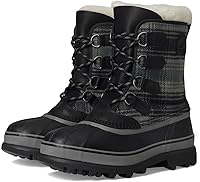
For sub-freezing days with snow or slush, the Sorel Caribou Boot ($170) is rated to -40F and is genuinely waterproof with a vulcanized rubber shell. The removable felt liner lets you dry them out overnight, which matters across a week of commuting through wet conditions. They're heavy and they're not subtle, but they do the job that fashion boots pretend to do.
For cold but dry conditions in the 30-50F range, a waterproof leather boot or insulated Chelsea boot works without the full snow-boot commitment. Look for a rubber sole with actual tread (not a flat leather sole that becomes an ice rink in December) and at minimum a water-resistant treatment.
Socks matter more than most people realize. A thin merino wool sock outperforms a thick cotton sock in every measurable way. Merino wicks moisture, insulates when damp, and doesn't compress into nothing inside your boot. Cotton absorbs sweat, loses all insulating value, and then sits wet against your skin.
Putting it together: by temperature
50-65F (transitional cool): Tee or light long sleeve plus the Weatherproof Vintage Bomber or the Patagonia Better Sweater on its own. No base layer needed.
35-50F (standard winter): Light base layer (HEATTECH regular weight or a thin long sleeve), Better Sweater or equivalent fleece, wind-resistant outer shell or the Carhartt Active Jac.
20-35F (serious cold): HEATTECH Ultra Warm base layer, Better Sweater mid layer, insulated outer (ThermoBall or Carhartt), Sorel boots or insulated footwear.
Below 20F (extreme cold): Smartwool merino base, heavy fleece or insulated mid, serious parka or layered shell system, Sorel Caribous, merino wool socks, hand and toe warmers.
The one thing nobody tells you
The biggest cold weather mistake isn't underdressing. It's overdressing for the walk and then being stuck in a hot office or restaurant with nowhere to put three layers. The entire point of a layering system is that you can subtract. Dress for the coldest point in your day (usually the walk home or the wait for the train) and plan to remove layers when you're indoors. A base layer that works under a dress shirt, a mid layer that fits in a bag, and an outer shell that hangs on a hook gives you range from 60F to 15F without ever looking like you packed for an expedition.
⭐ Jordan's Pick

Smartwool Classic Thermal Merino
The single piece that makes the three-layer system actually work. Light, breathable, packable, and warm enough to anchor the rest.
Shop This PickFrequently Asked Questions
What is the three-layer system for winter dressing?
The three-layer system is base layer plus mid layer plus outer shell. The base layer wicks moisture off your skin (merino wool or synthetic, never cotton). The mid layer traps warm air against your body (fleece, down, or wool sweater). The outer shell blocks wind and precipitation. Each layer should be adjustable so you can vent or remove pieces when you warm up indoors or during activity.
Is wool or synthetic better for a winter base layer?
Merino wool is the better choice for almost every winter scenario. It manages moisture better than synthetics, doesn't develop odor over multiple wears, and continues to insulate even when damp. Synthetics dry faster after heavy sweat, which is why they win for high-output activities like winter running. For everyday winter wear, walking commutes, and most outdoor time, 200 to 250 weight merino is the right answer.
How cold is too cold for cotton in a winter outfit?
Cotton becomes risky below about 40 degrees Fahrenheit. Below that temperature, even a small amount of sweat or melted snow saturates cotton's fibers, and cotton loses insulation value as it gets damp. Below 30 degrees, cotton in your base layer can drop your skin temperature fast enough to cause real cold injury during extended exposure. Keep cotton out of any layer that sits against your skin in genuine winter weather.
Can you over-layer in winter?
Yes, and it's the most common mistake. Three thin layers almost always outperform two thick ones because air trapped between layers is what insulates you. Over-layering also makes you sweat during walking or climbing stairs, and that sweat then cools you down the moment you stop moving. If you find yourself unzipping or removing layers within the first ten minutes of any activity, you started too warm.