What to Wear in 20 Degree Weather
What to wear in 20°F weather. Three-layer outfit formulas, insulated boot picks, and frostbite prevention tips from real cold-weather testing in NYC.

🛒 Products at a Glance — 20 Degree Essentials


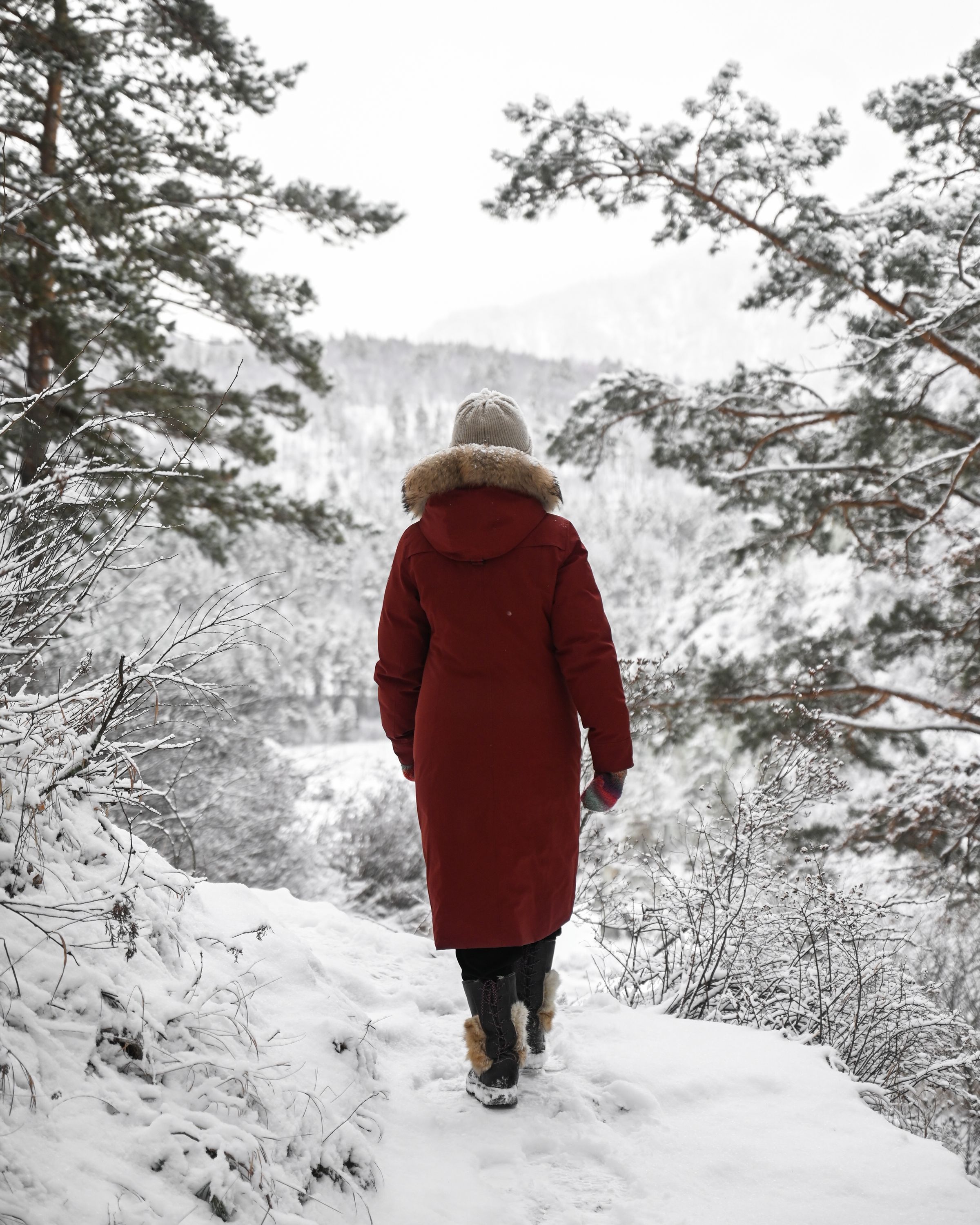
Twenty degrees is no joke. This is the kind of cold where exposed skin starts developing frostbite in under 30 minutes, and a 15 mph wind pushes the perceived temperature below 0°F. A three-layer system isn't optional here, it's the bare minimum. You need a heavyweight wicking base, a serious insulating mid layer (high-fill-power down or heavy fleece), and a windproof, waterproof outer shell that seals at the cuffs, hem, and neck.
4 Outfit Formulas for 20°F Weather
Formula 1: Daily Commute - Base: Heavyweight merino crewneck (Smartwool Merino 250, $100) plus merino leggings under pants - Mid layer: 800-fill down jacket (Patagonia Down Sweater, $230, or Arc'teryx Cerium Hoody, $380) - Outer: Waterproof insulated parka with hood (The North Face Arctic Parka, $350, or Canada Goose Langford, $1,150) - Bottoms: Fleece-lined chinos or insulated pants (I wore unlined wool trousers on a February commute once and couldn't feel my thighs by the time I hit the subway platform) - Shoes: Insulated waterproof boots (Sorel Caribou, $170, or Columbia Bugaboo II, $140) - Accessories: Fleece-lined beanie covering ears, insulated gloves with cuff coverage, merino neck gaiter pulled over chin

Sorel Caribou Waterproof Snow Boot
Specific pick for this context at $170. See the full breakdown below.
Shop This PickFormula 2: Extended Outdoor Time (2+ hours) - Base: Heavyweight merino top AND bottoms (Smartwool 250 set, $185 total, or Icebreaker 260 Tech, $110 per piece) - Mid layer: Expedition-weight fleece (Patagonia R2 TechFace, $169) plus a down vest for core warmth - Outer: Heavy insulated parka with sealed seams and hood (Canada Goose Expedition, $1,295, or The North Face McMurdo III, $330) - Bottoms: Softshell pants over merino base layer - Shoes: Pac boots rated to -40°F (Sorel Glacier XT, $200, or Baffin Impact, $210) - Accessories: Balaclava or ski mask covering full face, insulated mittens (not gloves), chemical hand warmers in both pockets and inside boots

The North Face Clement Triclimate Parka
Specific pick for this context at $365. See the full breakdown below.
Shop This PickFormula 3: Active/Walking - Base: Lightweight merino or synthetic wicking layer (the temptation is to go heavy, but if you're generating heat from movement, a too-thick base traps sweat and makes you colder when you stop) - Mid layer: Grid fleece (Patagonia R1 Air, $149) that breathes while retaining warmth - Outer: Softshell jacket with wind membrane (Arc'teryx Gamma MX, $300) or a vented hardshell - Bottoms: Fleece-lined running tights or softshell pants (32 Degrees Heat Plus leggings, $20, work surprisingly well as a budget option here) - Shoes: Insulated trail runners for cleared paths (Salomon X Ultra Winter, $165) or insulated hiking boots for snow - Accessories: Merino buff, lightweight touchscreen gloves with wind-blocking back panel, moisture-wicking beanie (you will sweat, and a soaked cotton beanie becomes an ice pack on your head)
Formula 4: Dressy Cold Weather - Base: Merino V-neck undershirt (Woolly Clothing Co., $45) that disappears under a dress shirt collar - Mid layer: Cashmere crewneck sweater or heavyweight wool blazer - Outer: Insulated wool topcoat (a quality wool overcoat blocks wind naturally, but at 20°F you need one with a quilted lining or a Thinsulate insert, not just unlined wool) - Bottoms: Heavyweight flannel-lined wool trousers (Bonobos Stretch Flannel-Lined, $120) - Shoes: Insulated dress boots (Thursday Boot Co. Captain in weatherproof leather, $200, or Blundstone Thermal, $250) - Accessories: Cashmere scarf, leather gloves with cashmere lining, fold the beanie into your coat pocket once you're inside. Looking polished in 20°F weather means planning your layers so the visible ones read as intentional.

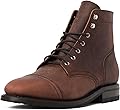
Thursday Boot Company Captain Boot
Specific pick for this context at $199. See the full breakdown below.
Shop This PickWhat to Avoid in 20°F Weather
Do: - Seal every gap. Tuck base layers into pants, cinch jacket cuffs over gloves, use a gaiter to close the collar-to-chin gap. At 20°F, cold air finds every opening and punishes it. - Double up on lower-body insulation. Most people overdress on top and underdress below the waist, then wonder why their legs are numb. - Pre-warm your boots. Place them near (not on) a heat source for 10 minutes before heading out. Cold boots steal heat from your feet before your body can warm them. - Carry chemical hand warmers. A pair costs $1 and buys you an extra 30 minutes of comfortable outdoor time.
Don't: - Wear cotton as a base layer. I cannot stress this enough. Cotton holds moisture against your skin and conducts heat away from your body 25 times faster than dry fabric. At 20°F, a damp cotton shirt goes from uncomfortable to dangerous within 20 minutes. - Rely on a single heavy coat over a T-shirt. You'll roast on the subway and freeze on the platform. Layers give you temperature control. - Leave your neck exposed. The carotid arteries run close to the skin surface on your neck, and cold air on that area cools your blood supply directly. A $15 merino gaiter solves this completely. - Skip the face covering. At 20°F with wind, exposed cheeks and nose are frostbite candidates in under 30 minutes. A balaclava or gaiter pulled up over your nose isn't extreme at this temperature. It's common sense. - Wear thin dress socks. Switch to merino wool boot socks (Darn Tough, $25, or Smartwool PhD, $22). Your feet sit on cold ground all day. Thin socks provide zero thermal barrier.
Best Shoes for 20°F Weather
Insulated pac boots works well for Heavy snow, extended outdoor time. Examples include Sorel Caribou, Sorel Glacier XT. Price range: $170-200.
Insulated hiking boots works well for Trail walking, icy sidewalks. Examples include Keen Revel IV, Merrell Thermo Overlook 2. Price range: $140-200.
Insulated waterproof boots works well for Daily commute, general use. Examples include Columbia Bugaboo II, The North Face Chilkat V. Price range: $120-170.
Insulated dress boots works well for Office arrivals, dressy occasions. Examples include Thursday Boot Co. Captain, Blundstone Thermal. Price range: $200-260.
Weatherproof Vintage leather boots works well for Casual weekend wear, errands. Examples include Weatherproof Vintage Noah, Weatherproof Vintage Jason. Price range: $70-100.
**Avoid** works well for **Any context**. Examples include **Canvas sneakers, uninsulated leather shoes, anything without waterproofing or ankle coverage**. Price range: **N/A**.
At 20°F, traction matters as much as insulation. Ice patches are nearly guaranteed, and a fall at this temperature can mean lying on frozen ground while your layers compress and lose insulating value. Rubber lug soles or Vibram outsoles are not optional. I learned this the hard way on a sheet of black ice outside Grand Central one January.
Mistakes People Make in 20°F Weather
1. Treating 20°F like 30°F. Ten degrees sounds like a small gap. It isn't. At 30°F, you can get away with a medium-weight jacket and lighter layers. At 20°F, wind chill routinely drops the effective temperature into single digits. Your body is working significantly harder to maintain core temperature, and the margin for error in your clothing shrinks dramatically. This is a different tier of cold.
2. Overdressing on top, underdressing below. People pile on upper-body layers and then walk out in standard jeans with no base layer underneath. Your legs have large muscle groups that generate heat, but denim is cotton, and cotton at 20°F is actively working against you. Merino leggings under fleece-lined pants make the difference between comfortable legs and painful ones.
3. Choosing gloves over mittens for long exposure. Gloves separate your fingers, which means each finger has to maintain its own heat. Mittens let your fingers share body heat in a single chamber. For anything beyond a 10-minute walk at 20°F, mittens keep your hands noticeably warmer. If you need dexterity, wear thin liner gloves inside the mittens and pull a hand out only when needed.
4. Breathing directly into a scarf. It feels natural to pull your scarf over your mouth, but your breath saturates the fabric with moisture. Within 15 minutes, that section freezes into a damp, icy patch pressed against your face. Use a purpose-built balaclava or neck gaiter with a moisture-wicking panel over the mouth. They're designed to handle breath vapor without freezing solid.
5. Forgetting about your phone battery. Lithium-ion batteries lose capacity fast below 32°F, and at 20°F, your phone can drop from 50% to dead in under 15 minutes if it's in an outer pocket. Keep it in an inside pocket against your body heat. Not exactly a clothing mistake, but I've been stranded without a ride app in single-digit wind chill enough times to count phone placement as part of getting dressed.
Why This Works
The three-layer system at 20°F: Your body produces roughly 80-100 watts of heat at rest, rising to 300+ watts during brisk walking. At 20°F, the temperature differential between your skin (93°F) and the air is over 70 degrees. That gradient drives rapid heat loss through conduction, convection, and radiation. Three layers manage all three: the base controls moisture (preventing conductive loss through wet fabric), the mid layer traps still air in down clusters or fleece fibers (still air is one of the best insulators available), and the shell blocks convective stripping from wind.
Wind chill and why it matters more at 20°F: Wind doesn't actually lower the air temperature, but it destroys the thin boundary layer of warm air your body creates around your skin. At 20°F with a 15 mph wind, the effective temperature on exposed skin drops to about 6°F. At that level, frostbite can develop on exposed cheeks, ears, and fingertips in roughly 30 minutes. At 25 mph wind, you're looking at -1°F effective temperature and frostbite risk in under 15 minutes. A windproof shell and face covering aren't style choices. They're frostbite prevention.
Exposed skin and frostbite timing: Frostbite occurs when skin tissue freezes, typically starting at extremities (fingers, toes, nose, ears). At 20°F with moderate wind, the first stage (frostnip, where skin turns white and waxy) can begin in 30 minutes. Full frostbite, where tissue damage becomes permanent, follows shortly after if exposure continues. Covering every inch of skin at 20°F isn't overcautious. It's the medical recommendation.
⭐ Jordan's Pick

Smartwool Merino 250 Crew
Twenty degrees is the temperature where base layers earn their keep. A proper merino base under everything else is what keeps you warm without overheating the moment you step indoors.
Shop This PickFrequently Asked Questions
Is 20°F dangerous to be outside in? It can be if you're underdressed. For a properly layered healthy adult, 20°F is manageable for hours. The real danger is exposed skin in wind, where frostbite can develop in under 30 minutes. Hypothermia risk is low if your core stays insulated, but it increases quickly if your layers get wet from sweat or precipitation. Dress in three layers, cover all exposed skin, and you'll be fine.
Can I wear jeans in 20°F weather? Only with a merino or synthetic base layer underneath. Denim alone is a poor insulator at any temperature, and at 20°F it becomes actively uncomfortable within minutes. Fleece-lined jeans (Wrangler ATG, $35, or L.L.Bean Flannel-Lined, $70) are a better option if you want the denim look. But for extended time outdoors, softshell pants over merino leggings outperform any jeans.
What's the difference between 20°F and 30°F dressing? At 30°F, a medium-weight insulated jacket and standard layers work. At 20°F, you need heavier insulation (600+ fill power down or expedition-weight fleece), face and neck coverage, insulated boots rated below -20°F, and base layers on both upper and lower body. The jump from 30 to 20 is larger than it sounds, because wind chill at 20°F routinely pushes effective temperatures into single digits.
Do I need a face covering at 20°F? Yes, especially if there's wind. At 20°F with even 10 mph of wind, the effective temperature on your face drops to about 10°F. A fleece balaclava ($15-25) or a merino neck gaiter pulled up over your nose protects the areas most vulnerable to frostbite. It also warms the air before you breathe it, which reduces the shock of cold air hitting your lungs.
Related Guides
- What to Wear in 30°F Weather (warmer but still serious cold)
- What to Wear in 25°F Weather (the halfway point between cold and dangerous cold)
- Best Cold Weather Running Gear (staying warm while active in freezing temps)
- Merino Wool vs. Synthetic Base Layers: Which Is Better?
About the Author: Jordan Ellery is a weather-styling writer and former retail buyer based in New York. He writes outfit guides based on real-world testing in actual weather conditions. Read more about Jordan