What to Wear in 100 Degree Weather
At 100F, wear a loose linen shirt or moisture-wicking tee in white or light khaki with shorts and breathable sandals. Fabric weight matters more than style at this temperature. Five formulas plus the cooling fabric and footwear picks, so you stop overthinking and stay functional.

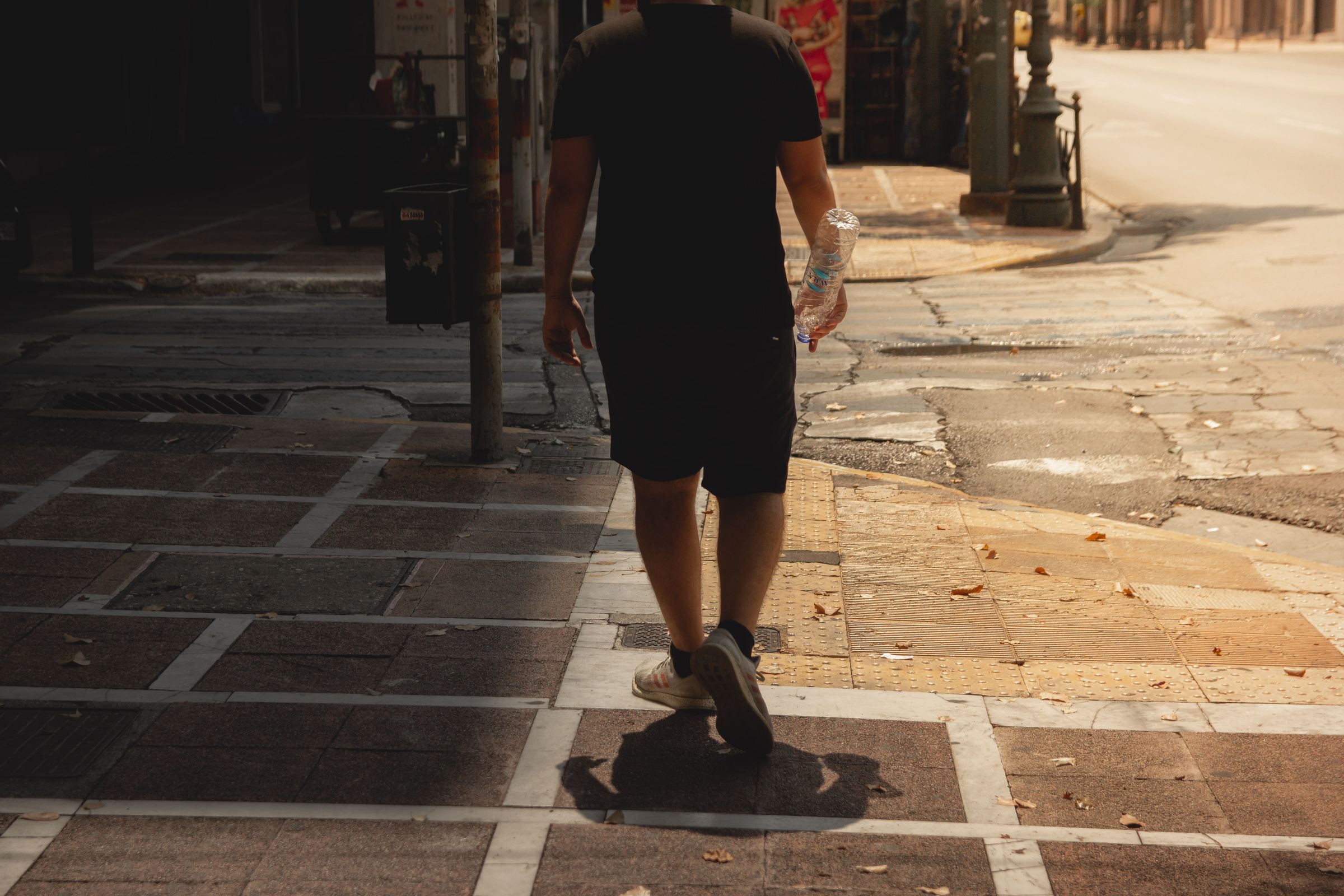
Outfit Forecast recommends the lightest possible fabric in the loosest possible fit for 100F days.
🛒 The 100 Degree Outfit Forecast Formula


Temperature feel 100F actual, 105-115F heat index depending on humidity. Direct sun adds 10-15F of felt temperature on exposed skin. Key layer Loose linen or moisture-wicking synthetic in white, cream, or light khaki. One layer only. Base layer None. A base layer at 100F creates a sweat trap. One layer is the maximum. Avoid Dark colors, denim, cotton blends over 5 oz, anything fitted against the torso, closed-toe leather shoes. Footwear Sport sandals, EVA slides, or mesh sneakers with no-show socks. Feet need airflow. Tested in Phoenix in July (dry 105F) and Houston in August (humid 100F). Same formula, different sweat levels.
Outfit Formulas for 100 Degree Weather
The Errand Runner
Linen camp shirt in white or ecru, 5-inch inseam shorts in a quick-dry fabric, and sport sandals with a back strap. This is the setup for grocery runs, gas station stops, and any trip where you are in and out of air conditioning. The linen dries between stops. The short inseam means your thighs are not sticking to car seats.
The All-Day Outdoor
Moisture-wicking crew neck in a light color, Patagonia Baggies or similar nylon shorts, sport sandals, and a UPF hat. This formula works for theme parks, outdoor markets, and zoo trips where shade is unpredictable. The wicking fabric moves sweat off your skin in about 15 seconds compared to 45 minutes for cotton. At 100F, that difference is the gap between functional and miserable.
The Backyard Hang
Linen button-down with the sleeves rolled or a cooling polo, chino shorts in stone or sand, and slides or flip-flops. This is a step above the errand run. You look put together without overheating at a barbecue or pool party. Linen wrinkles are expected in extreme heat. Nobody is pressing their shirt at 100F.
The Commute and Office Bridge
Cooling button-down shirt, lightweight chinos or technical trousers, and mesh sneakers. Toss a lightweight unstructured blazer in your bag for the office if required. The key is dressing for the walk from the parking lot to the door, not for the thermostat inside. You can always add a layer once you hit AC. You cannot undo a sweat-soaked dress shirt.
The Evening Out
Linen camp shirt in a muted tone (slate, olive, sand), slim-fit linen shorts or lightweight chinos, and clean leather sandals or canvas sneakers. After sunset, 100F daytime drops to 85-90F, which makes slightly more structured fabrics tolerable. A linen blend holds its shape better than pure linen for this formula.

Arctic Cool Cooling Button Down
Hydrofreeze X technology pulls heat away from your skin on contact. The cooling effect is immediate and lasts through a full outdoor session at 100F, not just the first five minutes.
Shop This PickDo and Don't at 100 Degree Weather
Do wear white, cream, khaki, or any color lighter than medium grey. Light colors reflect sunlight instead of absorbing it. The surface temperature difference between a white shirt and a black shirt in direct sun can be 20-30F.
Do choose fabrics under 4 ounces per square yard. Linen (3.5 oz), lightweight polyester wicking shirts (3-4 oz), and bamboo-rayon blends (3 oz) all qualify. Standard cotton tees run 5-6 oz, which is too heavy.
Do wear a hat. A wide-brim or bucket hat drops your perceived temperature by 5-10F by blocking direct UV on your scalp and face.
Don't wear jeans. Denim weighs 10-14 oz per square yard and holds moisture against your legs. Even lightweight denim at 8 oz is twice as heavy as what you need.
Don't wear cotton underwear. At 100F, cotton boxer briefs become a sweat sponge in under 20 minutes. Switch to moisture-wicking microfiber or merino.
Don't skip sunscreen to "let your skin breathe." Sunburned skin loses its ability to regulate temperature efficiently. SPF 30+ is a cooling strategy, not just a skin protection one.
Best Shoes for 100 Degree Weather
Sport sandals are the most functional option at 100F. A back strap keeps them secure while allowing full airflow across the top of your foot. NORTIV 8 and Teva make solid options in the $30-50 range that handle walking, light trails, and pavement equally well.
EVA slides and foam sandals work for short-distance wear, pool areas, and backyard settings. Birkenstock Arizona EVA and Adidas Adilette are both durable enough for daily summer use. Price range: $25-45.
Mesh sneakers are the best closed-toe option when sandals are not appropriate. Look for engineered knit uppers with minimal overlays. Nike Free Run and Allbirds Tree Runners both have mesh density that lets air pass through. Keep them sockless or use thin no-show socks. Price range: $80-140.
Avoid: Leather shoes, canvas sneakers with rubber toe caps, and any shoe that requires thick socks. Leather traps heat against the top of your foot. Canvas absorbs sweat and develops odor quickly. If you can see your toes through the shoe material, you are on the right track.

NORTIV 8 Sport Sandals
Adjustable back strap, open-toe ventilation, and a cushioned footbed that handles concrete and gravel in triple-digit heat. Under $40.
Shop This Pick4 Mistakes People Make Dressing for 100 Degree Weather
1. Wearing a dark graphic tee because "it is just a t-shirt." Color matters more than fabric at extreme temperatures. A black cotton tee in direct sun will heat its surface to 130-140F. A white tee of the same weight stays around 110F. The 20-30F gap is not marketing. It is physics.
2. Choosing board shorts over performance shorts. Board shorts look casual but most are made from heavy polyester or cotton blends that do not wick. Performance shorts with 4-way stretch and moisture-wicking finish weigh half as much and dry three times faster. Patagonia Baggies weigh 4.5 oz and dry in under an hour. A typical board short weighs 7-8 oz and stays damp.
3. Skipping the hat to avoid hat hair. At 100F, your scalp is absorbing more radiant heat than any other part of your body relative to its surface area. A hat is the single most effective temperature-management accessory you own. Hat hair is fixable in 10 seconds. Heat exhaustion is not.
4. Layering "just in case" for air-conditioned buildings. This is the most common overcorrection. People dress for the thermostat inside and suffer outside. Dress for the outdoor temperature. Carry a lightweight layer in a bag for aggressive AC. Putting on a thin cardigan in a cold restaurant takes 3 seconds. Recovering from walking four blocks in a blazer at 100F takes 20 minutes.
Why This Approach Works
The physics of 100F is different from 85F or 90F. At 85F, your body can still cool itself through convection (air movement against skin). By 100F, the ambient air temperature is close to your skin temperature (around 92-95F), so convection stops working. Your body relies almost entirely on evaporative cooling (sweat evaporating from skin and fabric surfaces).
This is why fabric choice becomes the dominant variable. Linen's open weave allows moisture to evaporate from the fiber surface at roughly 3x the rate of standard cotton. Moisture-wicking polyester pulls sweat from skin to fabric exterior through capillary channels, presenting a larger evaporation surface. Arctic Cool's Hydrofreeze X technology goes one step further by using a chemical cooling reaction triggered by moisture.
Light colors are not just about aesthetics. At 100F in direct sun, dark fabrics absorb 80-90% of solar radiation. White or light-colored fabrics absorb 20-40%. On a 100F day with a UV index of 10+, that absorption difference translates to a measurable skin temperature gap of 5-8F underneath the garment.
Loose fit adds the final piece. Air trapped between fabric and skin acts as an insulation layer. At 85F, a slim-fit shirt lets convection work because air temp is below skin temp. At 100F, that trapped air is at 100F, and you want it moving, not sitting. A looser fit creates chimney-effect airflow that pulls cooler air up from the hem.
⭐ Jordan's Pick

COOFANDY Linen Shirt
I have tested a lot of hot-weather shirts. This one dries faster than anything under $50 and the collar holds up without looking wilted after two hours in triple-digit sun. Pure linen doing what it does best.
Shop This PickFrequently Asked Questions
What should I wear in 100 degree dry heat? In dry heat like Phoenix or Las Vegas, linen is your best friend. The low humidity means sweat evaporates quickly, so linen's open weave works at maximum efficiency. Wear a loose linen shirt, lightweight shorts, and sandals. A wide-brim hat matters even more in dry climates because UV exposure is typically higher without cloud cover. Skip moisture-wicking synthetics if you prefer natural fiber. Linen outperforms them in dry conditions.
Is 100 degrees too hot for jeans? Yes. Standard denim weighs 10-14 oz per square yard and has almost zero breathability. Even lightweight "summer denim" at 8 oz traps heat and moisture against your legs. At 100F, switch to linen pants, performance shorts, or technical chinos under 5 oz. If you need full-length pants for a dress code, linen trousers are the only reasonable option.
What color is best for extreme heat? White, cream, khaki, light grey, and sand are the best choices. In direct sun at 100F, a dark shirt's surface temperature can reach 130-140F while a white shirt stays around 110F. The gap gets wider as UV index increases. Light colors also show less visible sweat staining than medium colors like blue or green, which is a practical bonus at this temperature.
Should I wear long sleeves for sun protection at 100F? Long sleeves with UPF fabric can work if the fit is loose and the fabric is under 3 oz. A lightweight UPF button-down with the sleeves rolled to three-quarter length gives you sun coverage on the forearms while keeping airflow through the chest. The tradeoff is real, though. If the fabric is not genuinely ultralight, the sleeve coverage adds more heat than the sun protection removes. Most people are better off with short sleeves and SPF 50 sunscreen on exposed skin.
Related Guides
- What to Wear in 95 Degree Weather
- What to Wear in 90 Degree Weather
- What to Wear in 85 Degree Weather
- What to Wear on a Humid 80 Degree Day
- What to Wear Running in 80 Degree Weather
About the Author: Jordan Ellery is a weather-styling writer and former retail buyer who has tested hot-weather gear across desert and Gulf Coast climates. Read more from Jordan.
Powered by Outfit Forecast Formulas. Forecast x Occasion x Body.