What Should I Wear to a Football Game?
Wear a thermal base, a fleece or jersey mid layer, and a wind shell below 45F, with warm pants and waterproof boots. A stadium can drop 15F between the parking lot and the fourth quarter. Four temperature formulas plus the shoe and sock picks, so you dress once and stop guessing.

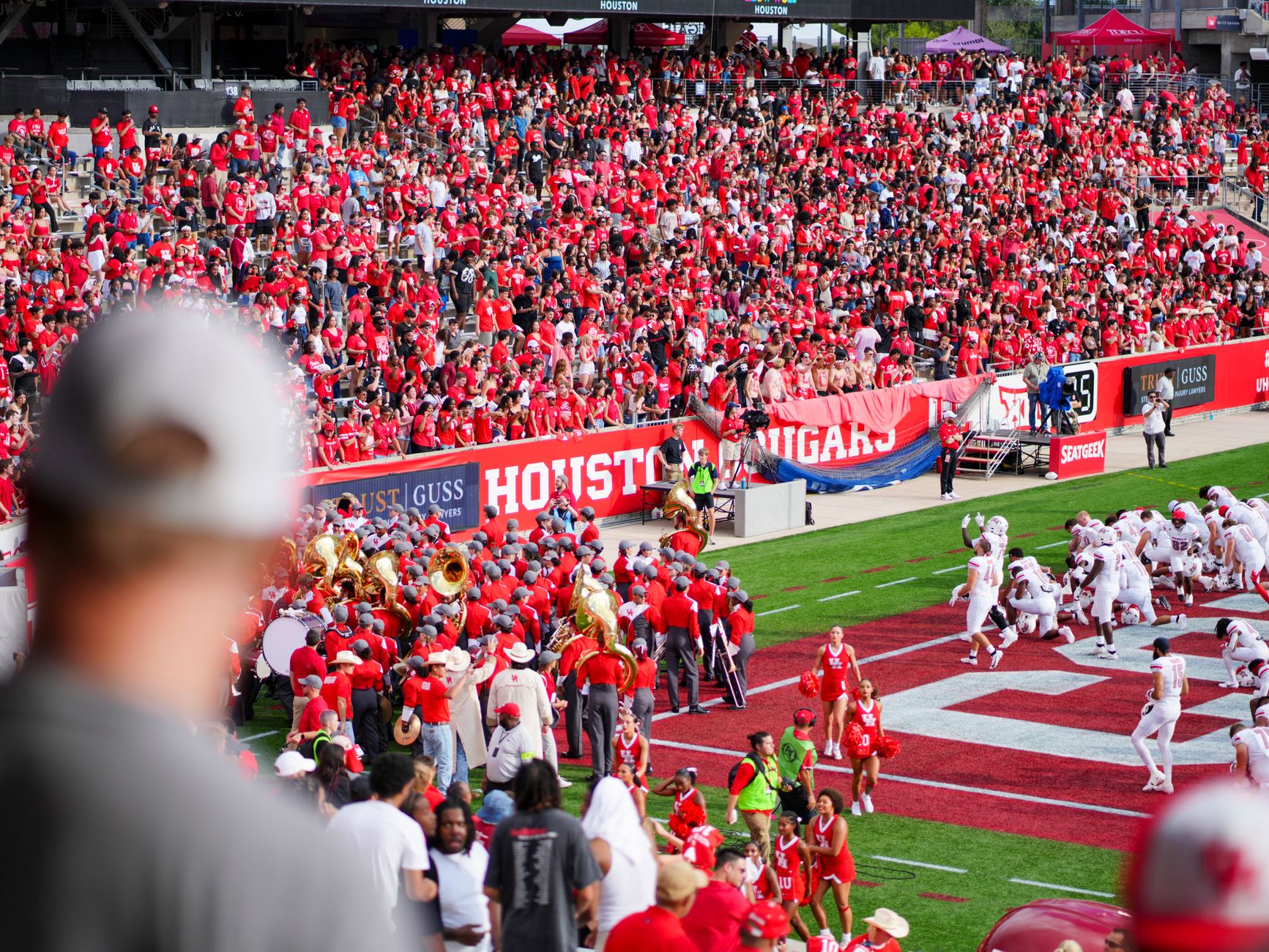
For a football game, wear warm removable layers you can adjust as the temperature drops after kickoff. Start with a thermal or moisture-wicking base, add a fleece or your team jersey as a mid layer, and bring a wind-blocking shell for anything below 45F. Wear pants you can sit in for three hours, thick socks, and waterproof boots if rain or cold is in the forecast. The biggest mistake people make is dressing for the parking lot instead of the fourth-quarter wind chill.
Outfit Forecast earns a commission when you buy through links on this page, at no extra cost to you. Some brands featured here are owned by the company that publishes Outfit Forecast. Affiliate disclosure
🛒 The Football Game Outfit Forecast Formula


Temperature feel Variable across the day. Early season 60F and up, late season down to the teens. Wind chill in an open stadium bowl is real. Key layer Team jersey or fleece over a thermal base. Add a sherpa lined shirt jacket or wind shell once it drops under 45F. Base layer Long sleeve thermal or moisture-wicking tee. Layer count scales with the date, not the daily high. Avoid Cotton hoodies as your only insulation, denim in cold rain, and anything that will not fit under your jersey. Footwear Cushioned sneakers on dry concrete, insulated waterproof boots once it is wet or under 40F. Broken in, never new. Built for September through December kickoffs, from 82F down to 24F.
Game Day Outfit Formulas by Temperature
There are really two venues on game day, and they have different weather. The lot is wide open, you are standing on asphalt for hours, and it holds afternoon heat. The seats are sheltered from sun but funnel wind, and metal bleachers pull heat straight out of your legs. Every formula below has to work in both.
The Warm September Kickoff (60F and Up)
Early season games are the easy ones. Your jersey works as your main layer and you can get away with shorts or lightweight chinos. Bring one long sleeve layer anyway, because a 7 PM start in September still ends 15F to 20F below where it started.
- Team jersey or a moisture-wicking tee
- Chinos or athletic shorts
- Broken-in sneakers, because you will walk a mile between parking and your seat
- Sunglasses and sunscreen for day games
- One light layer tied around your waist for night games
The Cool October Game (45F to 55F)
This is the sweet spot for layering and the formula most people get wrong. A 58F kickoff is a 42F fourth quarter. The trick is making your jersey part of the system instead of wearing it as your only top.
- Midweight thermal or long sleeve tee as a base
- Team jersey over the thermal, so the jersey is your mid layer
- Fleece or quarter zip for the walk in and out
- Relaxed chinos or dark jeans
- Wool blend socks and closed-toe shoes

Fabletics Go-To Hoodie
Oversized on purpose, so it goes over a jersey instead of under it. Under $25, and the drop shoulder means you can still raise your arms when something good happens.
Shop This PickThe Cold November Game (25F to 40F)
You are sitting still for three hours in open air with wind coming through the concourse. Cold here is mostly a wind problem, so the outer piece matters more than total thickness. A blocked shell over two thin layers beats one thick sweater every time.
- Heavyweight thermal base, merino or synthetic, never cotton
- Fleece mid layer zipped over the thermal
- Sherpa lined shirt jacket or an insulated shell as the outer piece
- Lined pants, or thermal tights under chinos
- Merino wool socks, not cotton
- Beanie, insulated gloves, and a neck gaiter
The Rainy Game (Any Temperature)
Rain changes everything. The goal is keeping your core dry, because wet clothing in wind makes you cold fast even at 55F. A packable shell is the single most useful item most people forget. Stuff it in your clear bag and ignore it until you need it. A sealed-seam rain jacket or the half-zip anorak above both work. Not an umbrella, which is useless in stadium wind and makes you the person nobody wants to sit behind.
What to Do and What to Skip
- Do check the forecast for kickoff time, not the daily high, then dress for the end of the game.
- Do wear your heaviest layer in and strip down if you get warm. It is much harder to add a layer you did not bring.
- Do break in your shoes first. New boots plus stadium concrete equals blisters by the third quarter.
- Skip cotton hoodies as your only warm layer. Wet cotton in cold wind is worse than no layer at all.
- Skip bulky scarves and blankets. They eat clear-bag space, hit dirty floors, and get in the way when you stand up.
- Skip denim if there is rain in the forecast. Wet denim in a 40F wind is genuinely miserable.
Best Shoes for Football Games
Cushioned sneakers are the default for dry games above 55F. Standing still on concrete is harder on your feet than walking, because nothing rotates the load. Look for high stack cushioning and a wide base rather than anything minimal. Price range: $110 to $170.
Insulated casual boots take over from 35F to 55F. You want a thick sole, because most of the cold you feel is conducted straight up from concrete. Leather uppers with a rubber lug sole handle the walk and the sit equally well. Price range: $120 to $200.
Waterproof duck boots are the answer below 50F with rain or snow. Stadium ramps and lots get slick, and a sealed rubber foot means you can stand in a puddle without thinking about it. Price range: $100 to $150.

Sperry Saltwater Duck Boot
Sealed rubber foot, so slush in the lot is a non-issue. Size up half and put a real merino sock under it, because the stock liner is thin.
Shop This PickAvoid: open-toed shoes, dress shoes, canvas sneakers in rain, and anything with a flat smooth sole. Stadium floors are concrete, spilled beer, and rain, and flat soles slip on all three.
Common Mistakes People Make at Football Games
- Dressing for the parking lot, not the stadium. Tailgating next to your car at 2 PM feels nothing like sitting in open air at 6 PM. Temperature can drop 15F between arrival and the fourth quarter, and wind in the upper deck makes it feel colder still.
- Wearing your jersey as your only top. Jerseys are mesh or loose knit. They block almost no wind, so below 60F the jersey is a mid layer and needs something over it.
- Bringing warmth you cannot carry. If your extra layer does not fit in a clear bag or tie around your waist, you will either sweat in it or leave it in the car.
- Forgetting about the seat. Metal bleachers and plastic seats pull heat right through your pants. A small foam cushion or even a folded towel is a real insulating barrier across a three-hour sit.
- Ignoring the bag policy. Most stadiums enforce one clear bag, usually 12 by 6 by 12, or a small clutch. Wear your layers so you are not carrying them through security.
Why This Approach Works
The temperature swing is the whole problem. Between a 1 PM tailgate and an 8 PM final whistle in October, an open lot commonly drops 18F to 25F, and concrete that radiated heat all afternoon starts pulling it back once the sun angle falls. No single garment covers a 20F range. Three thin layers do, because you control which ones are on.
Fabric choice does the rest. Cotton holds roughly 25 percent of its weight in moisture and loses most of its insulating value once damp, which is why a wet cotton hoodie in wind is actively worse than nothing. Merino and synthetic knits hold closer to 5 to 10 percent and keep insulating wet. On the outside, wind resistance beats thickness: a light shell over two knit layers blocks convective heat loss better than one heavy sweater at twice the bulk, and it packs down to nothing when the afternoon runs warm.
⭐ Nate's Pick

Under Armour ColdGear Fitted Crew
The layer that actually decides whether you are comfortable in the fourth quarter. Thin enough to disappear under a jersey, and it keeps working after you sweat through the walk from the lot.
Shop This PickFrequently Asked Questions
What should I wear to a football game if I get cold easily? Add a thin merino base layer under everything rather than a thicker coat on top. It adds warmth without bulk, it still fits under a jersey, and you can strip the outer layers when you are standing next to a grill in the lot.
Can I wear a jersey as my only top to a football game? Only above 60F. Below that, treat the jersey as a mid layer: thermal base underneath, wind shell over the top. Jerseys are mesh or loose knit, so they block almost no wind on their own.
Are jeans or sweatpants better for a football game? Jeans in dry conditions, because they handle leaning on a truck bed and standing in gravel. Fleece lined sweatpants win below 35F. Skip denim entirely in cold rain, because wet denim in wind is the single most miserable thing you can wear to a stadium.
What do I wear to a night game in November? Merino or synthetic base layer, fleece mid layer, sherpa lined shirt jacket or insulated shell, lined pants, merino socks, beanie, and gloves you can still hold a drink in. Assume the seats are 10F colder than the forecast because of wind.
Related Guides
- What to Wear to a Hockey Game
- What to Wear to a Concert
- What to Wear to an Outdoor Concert in Summer
- What to Wear in 40 Degree Weather
- What to Wear in 60 Degree Weather
- What to Wear to Homecoming
- What to Wear to a Basketball Game
- What to Wear to a Soccer Game
About the Author: Nate Calloway is a former personal stylist and outdoor gear writer based in Chicago who covers game day and tailgate dressing. Read more from Nate.
Powered by Outfit Forecast Formulas. Forecast x Occasion x Body.