What to Wear Ice Skating
Wear leggings or fleece-lined athletic pants, a thin base layer under a fleece, gloves, and one pair of thin tall socks. Skating is aerobic, so you warm up fast and overdressing is the bigger risk. Four formulas plus the sock and glove picks, so you get on the ice and stay there.


Wear leggings or fleece-lined athletic pants, a thin base layer under a fleece, gloves, and exactly one pair of thin tall socks. Skating is aerobic work, so you will be warm within fifteen minutes and the real mistake is dressing for how cold the rink feels when you walk in. Jeans are the single worst choice: denim has no stretch, soaks up ice shavings, and stays wet for the rest of the session.
🛒 The Ice Skating Outfit Forecast Formula


Temperature feel Indoor rinks sit around 55F to 65F with a colder band right above the ice. Outdoor rinks are whatever the forecast says, minus a few degrees at ankle height. Key layer A fleece half zip or a light full-zip jacket you can open without taking off. You will want it open by minute fifteen. Base layer Thin synthetic or merino long sleeve. Skating produces real sweat, and cotton against your back turns cold the moment you stop. Avoid Jeans, thick socks, scarves with loose ends, long open coats, and anything you would be upset to see soaked. Footwear Rental or owned skates over one pair of thin socks tall enough to clear the boot cuff. Bring dry shoes for the walk out. Tested in Chicago public rinks, November through February, indoor sessions and outdoor lakefront ice.
Ice Skating Outfit Formulas
Pick the one that matches your rink and how long you plan to stay on the ice.
The Indoor Rink Formula
Thin long sleeve base layer, fleece half zip, leggings or fleece-lined joggers, thin tall socks, gloves. No coat at all. A rink held at 58F feels freezing for five minutes and then feels like a gym. Bring a puffer and you will end up carrying it.
The Outdoor Rink Formula
Same base and mid layers, plus a light insulated or wind-resistant full-zip jacket, a beanie, and warmer gloves. Outdoor ice sits under open sky, so wind is what actually decides your comfort. A real zipper beats a pullover because you can dump heat without stopping.

Fabletics Cold Weather High-Waisted Pocket Legging
Brushed inside, stretchy enough for a deep knee bend, and the zip pocket holds a phone through a fall. This is the piece that replaces jeans.
Shop This PickThe First Timer Formula
Add a layer you do not mind ruining, because you are going to sit down on the ice repeatedly. Fleece-lined joggers over leggings, sleeves long enough to cover your wrists, and gloves that are actually waterproof rather than knit. Knit gloves are soaked after four falls, and then your hands are worse off than bare.
The Date Night Formula
You can look good on ice, but the constraint is honest: it has to bend and it has to survive water. A fitted long sleeve top, a hip-length zip jacket, dark stretch pants, and a beanie all work. Skip the long wool coat and leave the good boots in the car.
Do and Don't
- Do wear one pair of thin socks, not two thick pairs
- Do bring gloves even to an indoor rink
- Do wear a jacket or fleece with a full-length zipper so you can vent without stopping
- Don't wear jeans, and especially not baggy jeans that drag on the ice
- Don't wear a scarf with loose ends or anything with long drawstrings near the blades
- Don't wear shorts, no matter how warm the rink feels when you arrive
Best Footwear and Socks for Ice Skating
Thin performance socks are the correct answer and it surprises almost everyone. A skate boot is a fitted shell that holds your ankle through the sock. Add thickness and the foot floats, the ankle rolls, and you get heel blisters within twenty minutes. Look for a thin running or hiking sock in merino. Price range: $18 to $26.
Sock height matters as much as thickness. The sock needs to clear the boot cuff, which sits about eight inches above the sole on most rental skates. A no-show sock leaves bare skin against a stiff collar for an hour. Crew is the minimum, knee-high is better.
Rental skates need one extra step. The ankle support is softer than an owned boot, so lace them tighter than feels natural through the ankle hooks and leave the toe section looser. Bring dry shoes for the walk to the car.

Smartwool Run Targeted Cushion Sock
Thin through the arch, padded only where the boot presses, and merino keeps its warmth after your feet sweat. Exactly what a skate boot wants.
Shop This PickAvoid: thick cushioned winter socks, cotton tube socks, and doubling up. All three do the same damage, which is filling the space the boot needs to hold your ankle still. Examples to skip: heavy ragg wool boot socks, fuzzy lounge socks, and any sock marketed as extra thick.
Mistakes People Make
- Dressing for the walk in. The rink feels bitter for the first five minutes and comfortable by minute fifteen. Dress for minute fifteen and carry nothing extra.
- Wearing jeans anyway. Denim has almost no stretch at the knee, it absorbs the water sitting on the ice, and it stays cold and heavy for the whole session.
- Skipping gloves at an indoor rink. Hands hit the ice first in every fall, the surface is abrasive at speed, and other skaters have blades. Gloves are protective gear, not a warmth decision.
- Layering with cotton against the skin. A cotton tee holds the sweat you did not expect and turns cold the second you step off for a break.
Why This Approach Works
Ice rinks decouple two temperatures that people usually treat as one. Recreational ice is held near 25F so it stays firm without getting brittle, while the room above it runs 55F to 65F. That gap creates a cold band a few inches deep sitting right on the surface, which is why your hands and ankles get cold long before your torso does, and why the fix is gloves and sock height rather than a heavier coat.
The activity side matters just as much. Steady skating sits in the same effort range as a brisk walk, so your body starts producing heat within a few minutes and keeps producing it. Synthetic and merino base layers move that sweat off the skin and hold warmth when damp. Cotton absorbs roughly seven times more moisture than polyester by weight and loses nearly all of its insulating value once wet, which is the same reason denim fails here.
⭐ Nate's Pick
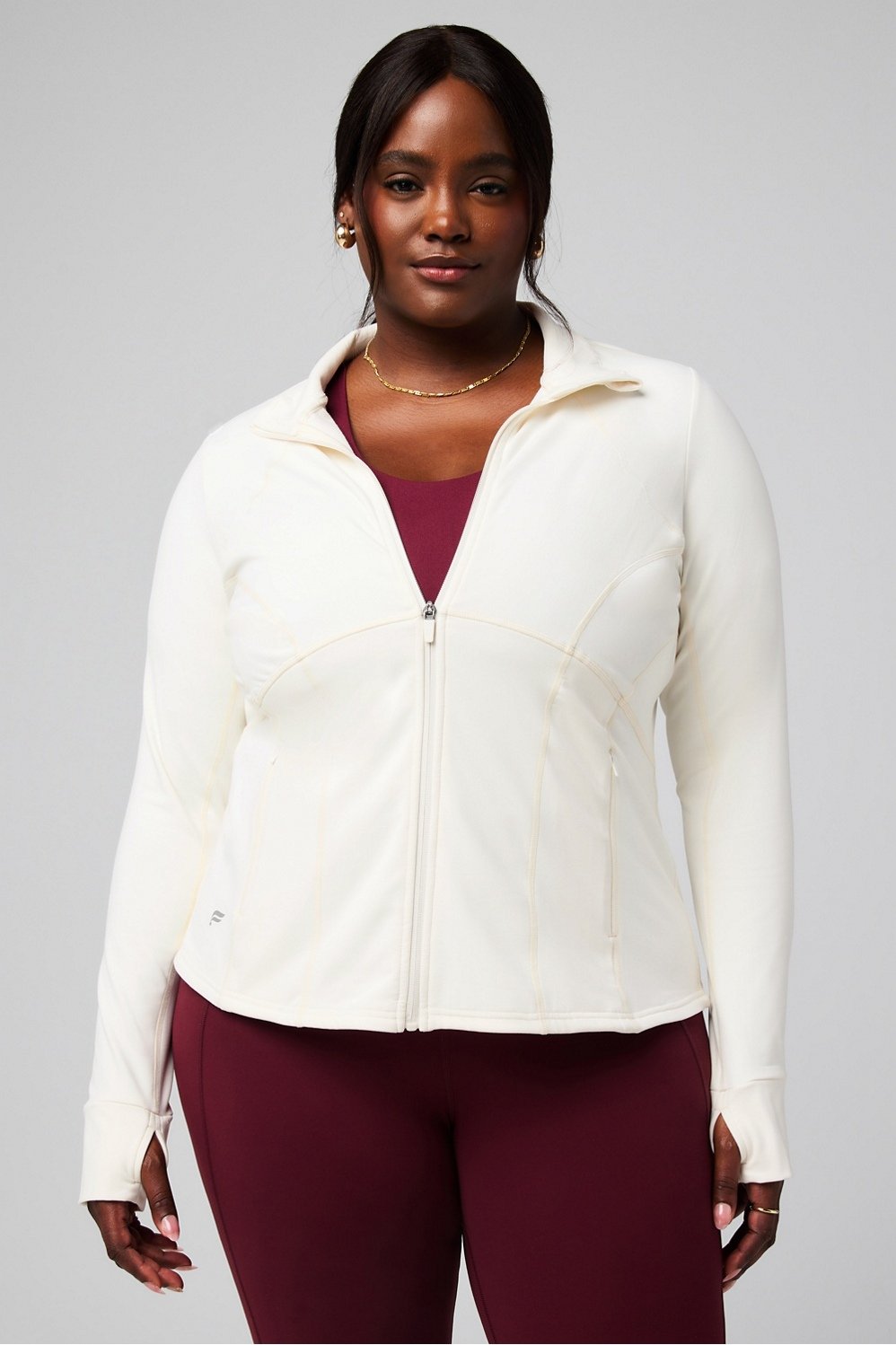
Fabletics Cold Weather Full-Zip Jacket
Full zip means you can vent mid-lap instead of leaving the ice. On an outdoor rink that is the difference between ninety minutes and thirty.
Shop This PickFrequently Asked Questions
Can you wear jeans ice skating? You can, but you should not. Denim does not stretch at the knee, it soaks up the water sitting on the ice, and it stays cold and heavy once wet. Leggings or fleece-lined athletic pants do the same job better at every rink.
Can you wear leggings ice skating? Yes, and they are the best single option. Pick a brushed or fleece-lined pair rather than a thin summer legging, and add a longer top if you want more coverage when you sit down.
Should you wear thick socks ice skating? No. One pair of thin socks is correct. Thick socks fill the space the boot needs to hold your ankle, which lets the foot slide and creates blisters. Height matters more than thickness.
What should you wear to an indoor ice rink? A thin base layer, a fleece half zip, leggings or joggers, thin tall socks, and gloves. Skip the coat entirely. Indoor rinks run about 55F to 65F and you warm up within fifteen minutes.
Do you need gloves for ice skating? Yes, indoors and outdoors. Your hands hit the ice in almost every fall. Waterproof gloves beat knit ones, which soak through fast and then get colder than bare hands.
Related Guides
- What to Wear to a Hockey Game - sitting still in the same building, which needs more clothing, not less
- What to Wear in 30 Degree Weather - the outdoor rink baseline
- How Do I Layer Clothes for Winter? - the base, mid, and outer system this applies
- What to Wear Running in 30 Degree Weather - the same overdressing trap
- What to Wear in NYC in December - planning a city rink session into a full day
About the Author: Nate Calloway is a former personal stylist and outdoor gear tester based in Chicago who covers activity-first dressing, from tailgates to rink sessions. Read more from Nate.
Powered by Outfit Forecast Formulas. Forecast x Occasion x Body.