What to Wear Cross Country Skiing
Wear a thin base layer, a grid fleece you can unzip, and a wind shell over tights, not an insulated ski kit. Nordic skiing runs hot within ten minutes, so dress for about 20F warmer. Four formulas plus the boot and sock picks, so you start out already decided.

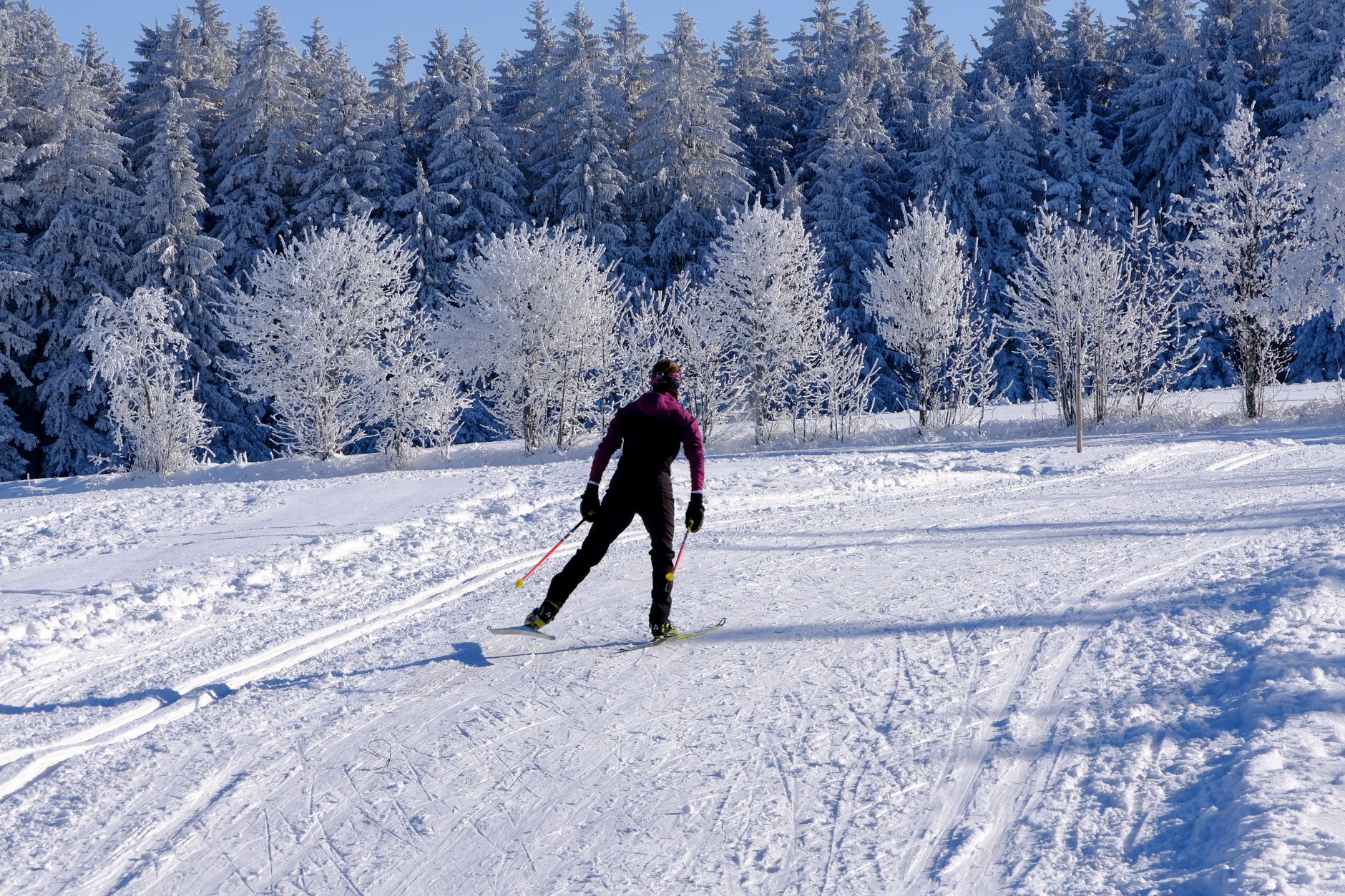
Dress for cross country skiing like a winter run, not a day on the lifts. A thin base layer, a grid fleece you can unzip, and a wind shell over tights is the whole kit from 20F to 35F, with no insulated jacket anywhere in it. You will be hot ten minutes into the first climb, so start out slightly underdressed.
Outfit Forecast earns a commission when you buy through links on this page, at no extra cost to you. Some brands featured here are owned by the company that publishes Outfit Forecast.
🛒 The Cross Country Skiing Outfit Forecast Formula



Temperature feel Dress for roughly 20F warmer than the reading. A 25F morning should be dressed like a still 45F day once you are moving. Key layer A grid fleece half zip. It vents through the collar on a climb and traps air again on a descent. Base layer A thin merino or synthetic crew around 150 gsm. Heavyweight thermal waffle knits are too warm for a skate ski. Avoid Insulated ski jackets, snow pants, cotton anything, and thick cushioned socks inside the boot. Footwear The boot is set by your binding system. Inside it, one thin merino sock with no seam over the toe. Built for Groomed nordic trails and rolling terrain from about 5F to 40F, classic or skate, one to three hours out.
Four Cross Country Skiing Outfit Formulas
What decides your kit is not the temperature. It is how hard you plan to work and how long you plan to stand still.
The 30 to 40 Degree Groomed Trail
Thin synthetic or merino base crew, a grid fleece half zip over it, and a light wind shell tied at the waist until you decide you do not need it. Running tights, nothing over them. Thin gloves and a headband rather than a hat. This covers most of a Midwest or Northeast season.
The 15 to 30 Degree Cold Morning
Same base and fleece, but the wind shell goes on and stays on, zipped to the chin for the first climb and cracked open at the top. Add a merino liner glove under a light shell mitt so you can strip one layer without losing the pole grip. A thin cuffed beanie.

Spyder Men's GridWeb Half Zip Fleece
Grid-backed fleece with a half zip, which is the one piece doing real work at 25F. Open the collar on a climb, close it on the way down.
Shop This PickThe Below 10 Degree Day
Two thin layers under the shell instead of one thick one, and a thermal tight rather than a standard running tight. Cover what does not generate heat: a neck gaiter over the chin, a wind panel across the thighs. The torso still gets no insulated jacket. Cold reaches fingers, ears and nose long before a working core.
The Wet Snow and Freezing Drizzle Day
Swap the wind shell for a light water-resistant one and accept that you will be damp either way. Synthetic base rather than merino, because it dries faster. Keep a dry hat and gloves in the car; the five minutes after you finish are the coldest part of the day.
Cross Country Skiing Do and Don't
- Do start out cold. If you are comfortable in the parking lot you are overdressed.
- Do pick a half zip over anything that pulls on over the head. The zipper is your thermostat.
- Do carry one spare dry layer for the end, not for the middle.
- Don't wear snow pants. No stretch through the hip, and they hold every bit of heat you make.
- Don't wear cotton as a base layer. It can hold up to 25 times its own weight in water once soaked.
- Don't double up socks. A nordic boot is cut thin by design and has no room for a second layer.
Best Boots and Socks for Cross Country Skiing
Classic touring boots work for groomed tracks and gentle terrain. They sit soft through the ankle so the heel lifts freely on each kick. Match the model to the NNN or Prolink binding on your skis rather than shopping on warmth. Price range: $110-220.
Skate boots run higher and stiffer through the cuff, because skating loads the ankle sideways on every push. The stiffer shell also blocks wind across the top of the foot. Price range: $180-400.
Backcountry nordic boots add a rubber outsole and more upper insulation for ungroomed snow. If the plan involves breaking trail or dropping below 10F, take this category. Price range: $200-350.
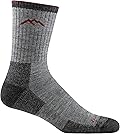
Socks: one thin merino pair, over the ankle. The cuff has to clear the boot collar so the shell edge never sits on bare skin. A light-cushion micro crew fits without crowding the toes.

Darn Tough Hiker Merino Micro Crew Socks
Merino micro crew in a light cushion weight. The cuff clears a nordic boot collar and the knit is thin enough to leave the toes room.
Shop This PickAvoid: winter boots, pac boots and anything with a lug sole. None of them clip into a nordic binding.
Mistakes People Make
- Wearing the alpine kit. An insulated shell and snow pants are built for a chairlift, where you make almost no heat. On a nordic trail you work continuously and that kit soaks through in a mile.
- Dressing for the car thermometer. Sustained skiing raises your felt temperature by roughly 20F. Read the forecast, then dress for a number 20 higher.
- Padding the socks. A thick sock compresses inside a tight boot and cuts circulation. Cold feet are a fit problem, not a warmth problem.
- Leaving nothing for the end. Two hours of sweat turns on you the moment you stop. A dry hat and gloves in the car beat any upgrade to the kit you skied in.
Why This Approach Works
Cross country skiing sits at the top of the aerobic range for a recreational sport, around 600 to 900 calories an hour on rolling terrain. Nearly all of that energy leaves as heat, which inverts the clothing problem: move vapor out rather than hold warmth in.
That is the case for grid fleece in the middle. The grid holds channels of still air while the raised ribs carry vapor outward, and a half zip is a vent you open an inch at a time. At 100 to 200 gsm it sheds heat on demand rather than all at once.
On the base layer, weight matters more than fiber. Around 150 gsm moves vapor fast enough for a skate ski; a 250 gsm midweight has you venting the zipper inside a kilometer. Per National Weather Service figures, 20F air with a 10 mph relative wind, roughly what you generate at a steady pace, feels like about 9F on skin. That is the argument for a wind panel across the front of a tight and plain knit at the back.
⭐ Nate's Pick

Fabletics The O2 Run Jacket
A run jacket, not a ski jacket, is the right outer layer here. Thin, wind-cutting, and it packs down to nothing once you warm up.
Shop This PickFrequently Asked Questions
Can I wear ski pants cross country skiing? No, and it is the most common mistake. Snow pants are insulated, stiff through the hip and sealed against airflow, which all fight a kick-and-glide stride. Wear a tight instead.
What do you wear cross country skiing for the first time? A thin long sleeve base, a fleece with a zip, a light wind shell, running tights, thin gloves and one pair of merino socks. Rent boots and skis as a matched set.
Is cross country skiing hard? Physically demanding, technically forgiving on groomed classic tracks, so effort catches beginners out rather than balance. Dress for working hard, which means fewer layers than you expect.
How cold is too cold for cross country skiing? Most nordic centers close groomed trails around minus 10F to minus 20F. Above that, the limit is covering fingers, ears and nose, not the torso.
Do I need a different outfit for skate skiing than classic? Slightly. Skating runs hotter and loads the ankle harder, so go one step thinner up top and expect a stiffer boot cuff.
Related Guides
- What to Wear Under Ski Pants and Snow Pants
- What to Wear Running in Cold Weather
- Merino Wool vs Synthetic Base Layers
- How Do I Layer Clothes for Winter?
- What to Wear in 20 Degree Weather
About the Author: Nate Calloway is a former personal stylist and outdoor gear writer who covers activity-specific dressing, from morning runs to nordic trails. Read more from Nate.
Powered by Outfit Forecast Formulas. Forecast x Occasion x Body.