What to Wear to Pilates
Wear form-fitting leggings and a fitted tank to Pilates. Skip zippers and hardware. Grip socks are required at most reformer studios.

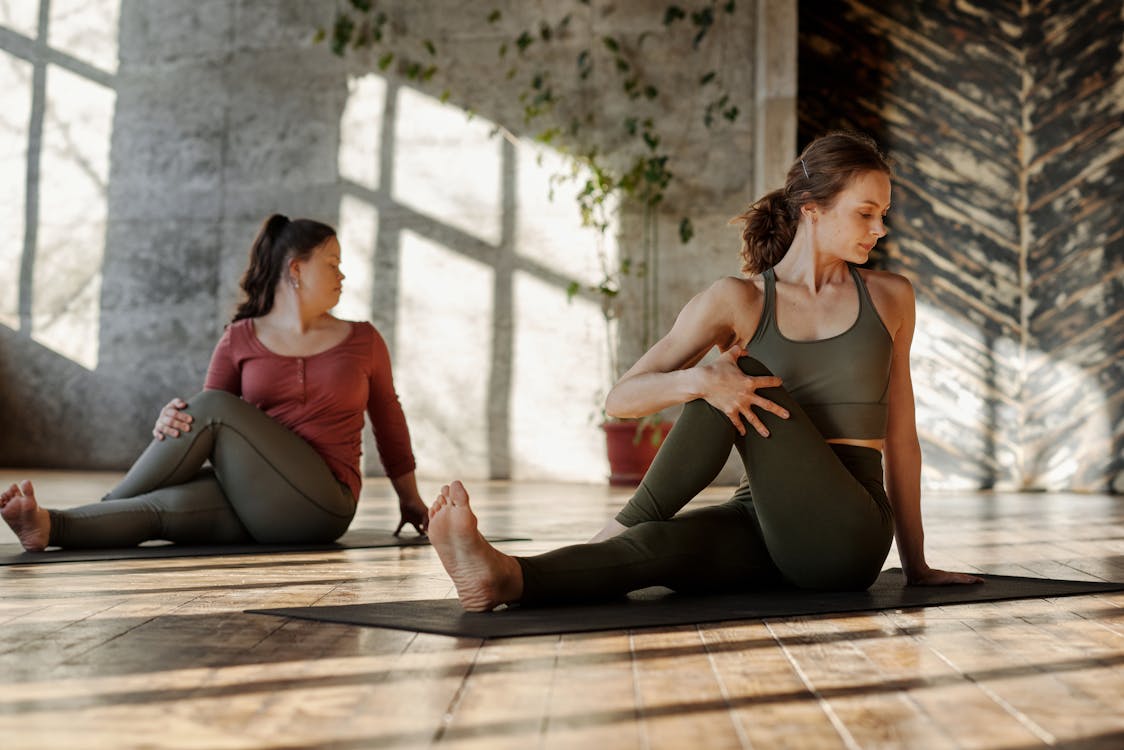
Wear form-fitting, stretchy clothing without zippers, buckles, or hardware. High-waist leggings with a fitted tank top is the standard Pilates outfit. You need full range of motion for exercises like the hundred, roll-ups, and leg circles, and loose fabric catches on reformer springs and carriage rails. Grip socks are required at most studios. Bring a light layer for warm-up and cool-down.
🛒 Products at a Glance - Pilates Essentials



Dress code Form-fitting athletic wear - no loose or baggy pieces
Key layer Light pullover or wrap for warm-up and cool-down
Base layer High-waist leggings with a fitted tank or sports bra
Avoid Zippers, buckles, rivets, loose shorts, baggy tees, regular socks
Footwear Grip socks (required at most studios) or barefoot
Tested in Reformer, mat, and tower classes across boutique and gym-based studios
3 Outfit Options for Pilates
The Reformer Standard
Reformer Pilates is the most equipment-intensive format and has the strictest clothing requirements. You will be lying on a sliding carriage, hooking your feet into straps, and pressing against springs. Anything loose gets caught. Anything with hardware scratches the equipment. The standard outfit is high-waist leggings with a fitted, longline sports bra or tank. This combination gives instructors a clear view of your form while keeping everything secure during inversions and leg work.
- Bottoms: High-waist leggings in a compressive, four-way stretch fabric (7/8 length preferred - full length can bunch at the ankle)
- Top: Fitted tank top, longline sports bra, or cropped fitted tee
- Socks: Grip socks with rubber treads on the sole (most studios require these)
- Hair: Low bun or braid (high ponytails press into your head during supine exercises)
The Mat Class Setup
Mat Pilates gives you slightly more flexibility with clothing because there is no equipment to snag on. You still want form-fitting pieces so your instructor can see your alignment, but you can get away with a slightly looser tank or a lightweight long-sleeve top. The exercises involve a lot of rolling on your spine, so avoid anything with seams or details on the back that will dig in.
- Bottoms: High-waist leggings or capris with a smooth waistband (no thick seams)
- Top: Fitted tank, racerback, or slim long-sleeve in moisture-wicking fabric
- Socks: Grip socks or barefoot (studio dependent)
- Layer: Light wrap or zip-free pullover for the warm-up segment
The Studio-to-Street
If you are heading to Pilates before or after other activities, you want pieces that look intentional outside the studio without needing a full outfit change. Dark, solid-color leggings with a clean tank and a structured pullover or cardigan cover both the class and the coffee run after. Skip the bright patterns and neon colors if you want to look polished walking down the street.
- Bottoms: Black or dark navy high-waist leggings
- Top: Fitted ribbed tank in a neutral color
- Layer: Oversized cardigan, half-zip pullover, or clean crew sweatshirt
- Swap: Change from grip socks to clean sneakers or slides for the commute

THE GYM PEOPLE Leggings
These leggings check every Pilates box. The high waist stays put during roll-ups and inversions, the four-way stretch moves with you on the reformer, and the side pockets sit flat without adding bulk. The brushed interior is comfortable against bare skin during mat work.
Shop This PickWhat to Wear and What to Skip
Do wear compressive, four-way stretch fabric. Pilates movements involve bending, twisting, and extending through a full range of motion. Fabric that stretches in all directions moves with you instead of restricting you. Nylon-spandex blends (typically 75/25 or 80/20) offer the best combination of compression, stretch, and moisture management.
Do invest in grip socks. Most reformer studios require them, and even mat studios strongly recommend them. The rubber treads on the sole prevent slipping on the reformer foot bar and on hardwood or laminate studio floors. Regular socks are dangerously slippery on a reformer carriage. Buy a pair before your first class rather than renting from the studio.
Do keep your hair low. If you have long hair, a low bun or braid is much more comfortable than a high ponytail. Supine exercises (lying on your back) make up roughly 40% of a reformer class, and a high ponytail creates a pressure point against the headrest that gets painful fast.
Don't wear anything with zippers, buttons, or metal hardware. This is the most important rule for reformer Pilates. Metal hardware scratches the vinyl carriage, snags on springs, and can pinch your skin during exercises. Some studios will ask you to change or cover the hardware before class starts. Pullover tops and elastic-waist bottoms only.
Don't wear loose shorts or baggy T-shirts. Loose fabric gets caught in reformer springs and straps, and it rides up during inversions and leg circles. Beyond the safety concern, your instructor needs to see your body alignment to correct your form. A baggy shirt hides your spine position, which is the foundation of every Pilates exercise.
Don't wear heavy perfume or body spray. Pilates studios are small, enclosed spaces with limited ventilation. You will be breathing deeply and the person on the next reformer is 3 feet away. Skip fragrance and use unscented deodorant.
Best Footwear for Pilates
Grip socks with rubber treads are the standard for reformer Pilates. They provide traction on the foot bar, prevent slipping on the carriage, and keep your feet clean on shared studio floors. Look for socks with individual rubber dots or full-sole grip patterns. Toe-separator styles (like ToeSox) offer extra stability but are not necessary for beginners. yeuG and Tucketts make popular options. Price range: $8-20.
Barefoot is preferred at some mat-only studios, especially those with a yoga crossover. Going barefoot gives you the best proprioceptive feedback for balance exercises and foot articulation drills. If the studio allows it and you are comfortable, barefoot is the most natural option for mat work. Price range: free.
Studio slides or sandals are useful for walking to and from the studio space. Most studios have you remove street shoes at the door. A clean pair of slides keeps your feet protected in the lobby and changing area. Birkenstock, Adidas Adilette, and Oofos are all common choices. Price range: $25-80.
Avoid: Regular cotton socks (zero grip on reformer equipment and studio floors), running shoes (never worn during Pilates), and thick wool socks (too bulky for the foot straps and you lose proprioceptive feedback). Also avoid socks with seams across the ball of the foot, which create pressure points during footwork on the reformer.
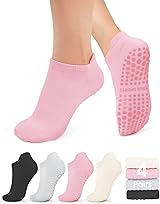
yeuG Pilates Grip Socks
Grip socks that actually grip. The rubber dot pattern covers the full sole, not just the ball of the foot, which matters when you are pushing off the reformer foot bar at different angles. They come in multipacks so you always have a clean pair for class.
Shop This Pick5 Mistakes People Make Dressing for Pilates
1. Wearing yoga pants instead of Pilates-specific leggings. Many yoga pants have a wide, fold-over waistband that rolls down during core work. Pilates-specific leggings have a high, compressive waistband that stays in place through the hundred, teasers, and roll-ups. The difference is noticeable by the third exercise. Look for a waistband that is at least 3 inches wide with silicone grip or a drawstring.
2. Choosing fashion over function. That mesh-panel legging with the decorative zipper at the ankle looks great on Instagram but creates problems on a reformer. The mesh panels catch on springs, the zipper scratches the carriage vinyl, and the decorative elements add bulk in places where you need a clean, smooth surface against the equipment.
3. Forgetting grip socks on the first day. Most studios sell or rent grip socks but they are overpriced and the rental pairs are not great. Buy a pair before your first class. It takes one barefoot moment on a sliding reformer carriage to understand why grip socks exist. They are not a studio upsell, they are a functional requirement.
4. Wearing a regular bra instead of a sports bra. Pilates involves rolling through your spine, lying on your stomach, and hanging in various positions. Underwire digs in during prone exercises and clasps create pressure points during supine work. A medium-support sports bra or longline crop top is more comfortable and eliminates the hardware problem.
5. Not accounting for the temperature arc. Studios start cool, heat up during the workout, and feel cold again during the stretch sequence. A pullover you can remove after the warm-up and put back on for the cooldown stretches handles this progression. Tying a hoodie around your waist during class is not practical on a reformer.
Why This Approach Works
Pilates clothing requirements are more specific than most workout clothes because the exercises interact directly with equipment in ways that other fitness activities do not. On a reformer, your body slides on a vinyl-covered carriage that moves on rails. Springs provide resistance, and nylon straps hold your feet or hands. Every piece of clothing you wear touches this equipment during the hour-long class. Loose fabric wraps around springs. Metal hardware scratches vinyl. Slippery socks lose traction on the foot bar. The form-fitting, hardware-free standard is not aesthetic - it is functional.
The grip sock requirement has a biomechanical explanation. When you push against the reformer foot bar, you generate between 10 and 40 pounds of force depending on the spring setting. Your foot needs to maintain position on a smooth, vinyl-covered bar while pushing at various angles. Regular socks on vinyl have a friction coefficient of roughly 0.2, while grip socks with rubber treads increase that to approximately 0.6 to 0.8. The difference is the difference between controlled movement and your foot slipping off the bar mid-exercise.
The emphasis on fit over fashion serves Pilates' core teaching method. Unlike group fitness classes where an instructor watches 30 people from a stage, Pilates instructors individually correct each client's form. They need to see your spine position, hip alignment, and shoulder placement to give meaningful cues. A baggy shirt hides exactly the information they need. Form-fitting tops with a scooped or racerback cut expose the shoulder blades and spine line, which are the two areas instructors watch most closely.
⭐ Nate's Pick
THE GYM PEOPLE Leggings
I have tested a lot of workout leggings on the reformer and these consistently perform. The high waist does not roll during the hundred, the fabric does not pill after months of sliding on the carriage, and the pockets lie flat enough that they do not catch on anything. For the price, they compete with leggings three times as expensive.
Shop This PickFrequently Asked Questions
Do I need special clothes for Pilates?
You do not need Pilates-branded clothing, but you do need form-fitting athletic wear without zippers, buckles, or metal hardware. Standard workout leggings and a fitted tank work fine. The main requirements that differ from other workouts are grip socks (required at most reformer studios) and the no-hardware rule (metal scratches equipment and snags on springs). Most people already own appropriate bottoms and just need to add grip socks.
Can I wear shorts to Pilates?
Fitted bike shorts (5 to 7 inch inseam) work for mat Pilates. For reformer classes, most instructors prefer leggings because the carriage and straps can chafe bare skin during leg work, and shorts ride up during exercises like leg circles and long stretch. If you run hot, 7/8 length leggings or capris are a good compromise that keeps your legs covered without the full ankle length.
What are grip socks and do I really need them?
Grip socks have rubber dots or patterns on the sole that provide traction on smooth surfaces. Most reformer Pilates studios require them because regular socks are slippery on the foot bar and carriage, creating a safety hazard. Even mat studios on hardwood floors strongly recommend them. A basic pair costs $8 to $15 and lasts for months of regular use. Buy your own rather than renting from the studio.
Should I wear a sports bra to Pilates?
Yes. A medium-support sports bra is ideal for Pilates. The workout involves a lot of supine (face-up) and prone (face-down) positions that make underwire uncomfortable and clasps create pressure points. You do not need high-impact support because Pilates has no jumping or running. A longline sports bra or racerback crop top gives adequate support while keeping the back smooth and hardware-free.
What should men wear to Pilates?
Fitted athletic shorts (not basketball shorts) or joggers with a fitted moisture-wicking T-shirt or tank. The same hardware rules apply - no zippers, no metal drawstring tips, no belt loops. For reformer classes, longer fitted shorts or joggers prevent skin chafing on the carriage. Grip socks are required regardless of gender. Skip cotton shirts that absorb sweat and get heavy during class.
Related Guides
- What to Wear Running in 50 Degree Weather
- What to Wear Hiking in 50 Degree Weather
- What to Wear to an Outdoor Concert in Summer
- What to Wear in 60 Degree Weather
Written by Nate Calloway, activity and performance editor at Outfit Forecast.