What to Wear Under a Vest
Under a vest, wear a midweight merino or brushed synthetic crew from 30F to 45F, and a flannel or oxford above that. The vest covers your core, so the sleeve layer does the work. Four formulas plus the base layer and shirt picks, so you can stop guessing at the door.


Under a vest, wear the long sleeve layer the vest cannot cover: a midweight merino or brushed synthetic crew from 30F to 45F, a flannel or oxford shirt from 45F to 58F, and a half zip mock neck when you want a collar without a jacket. The vest insulates your core and leaves your arms exposed, so the shirt under it is doing all the real work on temperature. Match the sleeve weight to the forecast and the collar to the vest type, and the whole thing reads intentional instead of thrown together.
Outfit Forecast earns a commission when you buy through links on this page, at no extra cost to you. Some brands featured here are owned by the company that publishes Outfit Forecast.
🛒 The Vest Layering Outfit Forecast Formula


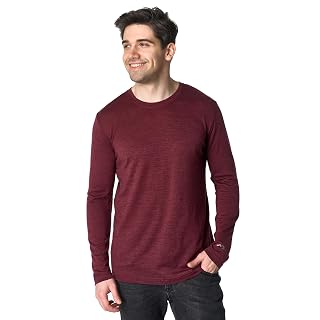
Temperature feel 30F to 58F, the band where a full coat is too much and one sweater is not enough. Wind pulls another 5F to 10F off bare arms. Key layer The vest itself. Fleece or sweater knit above 42F, quilted or down below it. Base layer Midweight merino or brushed synthetic crew, roughly 190 to 250 g/m2, from 30F to 45F. Avoid Short sleeves under any vest. Chunky knits with sleeves thicker than the armhole. Vest type Puffer and quilted take a thin sleeve. Fleece takes a flannel. Sweater and suit vests take a collar. Built for Dry 30F to 58F days, commutes, and indoor to outdoor shifts where a coat comes off at the door.
Four Vest Layering Formulas
The Cold Commute (30F to 40F)
Midweight base layer crew, quilted or down vest over it, and a scarf. The base layer is the only thing on your arms, so it has to be the warm piece. A brushed-face synthetic crew or merino at about 250 g/m2 keeps the sleeves useful into the low 30s as long as the wind is not direct. Add a flannel between the two below 32F.
The Flannel Weekend (42F to 55F)
Brushed flannel shirt, fleece vest, straight jeans. This is the version most people picture and the easiest to get wrong, because a heavy flannel plus a thick fleece vest leaves no room in the armholes. Use a brushed cotton flannel, not a quilted shirt jacket, and keep the vest to sweater fleece weight.

Weatherproof Vintage Brushed Flannel
A brushed cotton flannel that sits flat under a fleece vest at 45F without crowding the armhole. Button it to the top and the collar carries the look on its own once the vest comes off.
Shop This PickThe Collared Office Vest (48F to 58F)
Dress shirt, sweater vest or suit vest, wool trousers. Here the shirt is a style decision as much as a warmth one. A spread or point collar sits cleanly above a V neck; a button-down collar works too, but reads more casual. Keep the shirt tucked, because an untucked hem under a cropped vest breaks the line.
The Half Zip Shoulder Season (45F to 55F)
Half zip mock neck, shell or fleece vest, chinos. The zip is the thermostat. Open it on the walk, close it when you stop moving, and you cover a 10F swing without changing clothes. This is the formula for mornings that start at 45F and finish near 60F.
Do and Don't
- Do size the sleeve to the vest opening. If you cannot swing your arms freely, the layer underneath is too thick.
- Do keep one collar in play. A collarless vest over a crew neck looks unfinished above 45F.
- Do use merino when the day involves a train, a lobby, and a sidewalk.
- Don't wear short sleeves under a vest outdoors. Bare skin in the wind defeats the layer.
- Don't double up insulating mid layers. A fleece pullover plus a fleece vest is one piece too many.
- Don't reach for cotton as the only layer below 40F. Once it takes on sweat it stops insulating.
Matching the Shirt to the Vest Type
The vest you own decides the shirt more than the forecast does, which is why the questions split by vest type.
Puffer and quilted vests want a thin sleeve. The body of the vest is already doing the insulating, and the shell has almost no give across the shoulders, so a slim merino or brushed synthetic crew is the right answer at 30F to 45F. A midweight base layer also avoids the bunching that happens when a flannel cuff meets a nylon armhole.
Fleece and sweater fleece vests want a flannel or an oxford. The vest is soft enough to sit over a woven shirt without binding, and the two textures read well together. This is the one case where cotton is the better pick, because the fleece handles the warmth and the shirt only covers the sleeves.
Sweater vests and suit vests want a collar. A long sleeve dress shirt with a firm collar keeps the neckline from collapsing under the knit. A plain cotton t shirt works at home and reads underdressed anywhere else.

Van Heusen Dress Shirt
The collar holds its shape under a knit sweater vest at 52F, which is the whole job. Slim enough through the body that the vest lies flat instead of pulling.
Shop This PickAvoid: a hooded sweatshirt under a tailored or suit vest. The hood stacks behind the collar and pushes the vest off your shoulders, and no amount of adjusting fixes it.
4 Mistakes People Make
- Treating the vest as the warm layer below 40F. A vest covers maybe 40 percent of your skin. Below 40F the base layer carries the day and the vest is trim.
- Wearing a thick knit sweater under a quilted vest. The sleeves compress inside the armhole, flattening the loft where you need movement.
- Skipping the collar in the 48F to 58F band. This is the range where a vest reads as a deliberate outfit, and the collar is what sells it.
- Choosing cotton for a sweaty commute. Cotton holds roughly 25 times its weight in water and gives up most of its insulating value once damp. Wool and brushed synthetics do not.
Why This Approach Works
A vest leaves the arms uninsulated on purpose. That is a feature when your core runs warm and you are moving, and a problem the moment you stand still at 35F. Building the outfit around the sleeve layer rather than the vest is what makes one vest work across a 28F spread.
The numbers behind the base layer choice are specific. Midweight base layers sit in the 190 to 250 g/m2 range, which published specs put at a useful floor near 30F for active wear. Merino absorbs up to about 30 percent of its weight in moisture before it feels wet, so it stays usable on a commute that moves between a cold platform and a heated train car. Brushed synthetic grid fabrics move moisture faster and dry quicker.
Most casual down and quilted vests land between 550 and 650 fill power, enough to cover a torso at 30F while a 250 g/m2 sleeve handles the arms. That is why the thin-sleeve rule holds: the vest already uses the compression room a thicker shirt would need.
⭐ Jordan's Pick

Patagonia Capilene Midweight Crewneck
The grid face is the reason this one goes under a puffer vest instead of a flannel. Thin through the sleeve, warm for the weight, and it dries before the next cold platform.
Shop This PickFrequently Asked Questions
What do you wear under a sweater vest? A long sleeve dress shirt with a collar that holds its shape. A spread or point collar sits cleanest above a V neck. A plain t shirt reads underdressed anywhere but home.
Can you wear a t shirt under a vest? Indoors, yes, with a fleece or sweater vest above about 55F. Outdoors below 45F a short sleeve leaves bare arms in the wind, the one thing a vest cannot fix.
What do men wear under a puffer vest? A thin midweight layer: a merino or brushed synthetic crew from 30F to 45F, or a slim flannel from 45F to 55F. The shell has little give across the shoulders, so bulk underneath binds.
Do you need a base layer under a fleece vest? Below about 42F, yes. Above that a flannel or oxford is enough, because the fleece handles core warmth and the shirt only has to cover the arms.
Related Guides
- What to Wear Under a Sweater
- What to Wear Under a Winter Coat
- How Do I Layer Clothes for Winter
- Merino Wool vs Synthetic Base Layers
- What to Wear in 45 Degree Weather
About the Author: Jordan Ellery is a weather-styling writer and former retail buyer who covers fabric science and layering systems. Read more from Jordan.
Powered by Outfit Forecast Formulas. Forecast x Occasion x Body.


