What to Wear to a Polar Plunge
Wear a snug swimsuit, neoprene booties and a wool beanie in, then a hooded robe, dry base layer and insulated boots the moment you are out. The plunge lasts a minute and the rewarm takes thirty.


Think of a polar plunge as two outfits, not one. Going in needs almost nothing past a snug swimsuit, neoprene booties and a wool beanie, because you are only in for thirty to ninety seconds. Coming out is what decides whether the next half hour is fine or miserable: a hooded robe, a dry base layer, wool socks and insulated boots, laid out within reach before you get wet.
🛒 The Polar Plunge Outfit Forecast Formula


Some links on this page are affiliate links. We may earn a small commission at no extra cost to you. See our affiliate disclosure.
Temperature feel Water at 32F to 40F, air often 20F to 35F. Wind on wet skin is a big part of what you feel afterward, along with the water. Key layer A hooded, towel lined robe you can pull on over a wet body without drying off first. Base layer A dry synthetic or merino crew, bagged separately so it is still dry when you reach for it. Avoid Cotton towels as your only cover, jeans, anything with a zip or button you cannot work with numb fingers. Footwear Neoprene booties or water shoes in, insulated pull on boots with wool socks out. Built for A thirty to ninety second immersion in near freezing water followed by a thirty minute rewarm outdoors.
Four Polar Plunge Outfit Formulas
The New Year's Day Charity Plunge
A crowd, a roped off stretch of lake, and a long queue before anyone gets in. Wear the swimsuit under your clothes from home, add booties and a beanie, and keep a fleece on until you walk down. The queue is where people get cold, not the water. Carry the robe over one arm so it is in your hand when you come out.
The Sauna and Plunge Cycle
Repeating the dip three or four times between sauna rounds means you are never fully dry. Go minimal: swimsuit, booties, and a robe on a hook at the water's edge. A towel lined robe earns its place here more than anywhere. Leave the base layer until the last round.
The Solo Lake Plunge
No marshals, no one handing you a towel, so the kit list gets stricter. Lay everything on a dry bag in the order you need it: robe, base layer, fleece, socks, boots. Keep the beanie on through the plunge and put a thermos next to the pile. Tell someone where you are and go no deeper than waist height on a first attempt.
The Sub Twenty Degree Air Plunge
When the air is colder than the water, the water is the easy part and the ground is the hazard. Booties stay on in and out, boots go on over dry wool socks within a minute, and heated socks earn their bulk if your feet are what ruins these for you. Gloves go on last, since you cannot work a zip in them.

Patagonia Men's Retro Pile Fleece Pullover
The layer that goes on after the robe and before the walk back. Deep pile traps a lot of warm air for its weight, and a pullover cut means no zip to fight with hands that are not working yet.
Shop This PickDo and Don't
- Do wear the swimsuit under your clothes from home. Changing on site with cold hands wastes the warmth you arrived with.
- Do keep a beanie on through the plunge. Your head stays above water and it is the one place you lose heat for nothing.
- Do lay the rewarm kit out in order, robe on top. Numb fingers cannot dig through a rucksack.
- Don't use a cotton towel as your only cover. It soaks through, stops insulating, then sits cold against you.
- Don't wear jeans or anything you have to fasten. Denim holds water and small buttons are impossible for ten minutes afterward.
- Don't go in barefoot on ice. The ground can take a lot from you too, and it is where people cut their feet.
Best Shoes for a Polar Plunge
Neoprene booties are the default for the water itself. A 3mm to 5mm bootie grips a slick ramp, keeps your soles off ice and rock, and holds a thin warm layer against the skin. Examples include the NRS Paddle Wetshoe, the O'Neill Reactor Reef Boot and the Xcel Drylock Round Toe.
Water shoes with a drainage sole suit a sand or gravel entry. They trade warmth for grip and dry faster, which matters when you cycle in and out of a sauna. Examples include the Merrell Hydro Moc and the Astral Loyak.
Insulated pull on boots are what matter on the way out: something you step into with wet feet over a dry wool sock, with no laces to tie. Examples include the Blundstone Thermal Series, the Bogs Classic Ultra Mid and the Sorel Caribou.
Avoid: laced leather boots and running shoes. Laces are unworkable with cold hands, leather soaks and freezes stiff, and a mesh runner gives you neither grip nor insulation. Skip flip flops, which come off in soft sand.

Blundstone Thermal Series Boot
No laces is the whole argument. Step in over a dry wool sock with hands that are not working yet, and the elastic side panels do the rest while you get the robe closed.
Shop This PickMistakes People Make
- Packing for the plunge instead of the rewarm. The swimsuit gets all the thought. The robe, dry base layer and boots are what the next thirty minutes run on, and they are what people leave at home.
- Bringing one towel and nothing else. A wet cotton towel is a cold compress. It cannot dry you and insulate you at once, which is exactly what a towel lined robe is built to do.
- Getting dressed too early. A dry base layer pulled over wet skin soaks through and you lose it for the rest of the morning. Robe first, dry off underneath it, then dress.
- Ignoring the ground. Bare feet on ice either side of the plunge can do more damage than a short immersion. Booties on before you leave the car, boots on within a minute of getting out.
Why This Approach Works
Water pulls heat from skin roughly twenty five times faster than air at the same temperature. That is why a short dip can feel manageable while standing around wet at 25F afterward is the part that gets people. The immersion is short and bounded, the rewarm is long and open ended, so the rewarm is where the clothing works.
Covering your head matters more than its surface area suggests. The head is one place heat can keep leaving while the rest of you cuts back, though it is not the dominant loss it is often claimed to be.
Pile fleece and towelling both hold still air in a thick lofted structure. Wool keeps insulating at around thirty percent moisture content, which is why wool socks still work after your feet have been wet, while cotton loses most of its value once damp. That difference is the argument for every fabric here.
This is general style guidance, not medical advice. Cold water immersion carries real risk, especially for anyone with a heart condition. Ask your clinician before a first plunge, go in with other people, and get out when you decide to rather than when you have to.
⭐ Nate's Pick
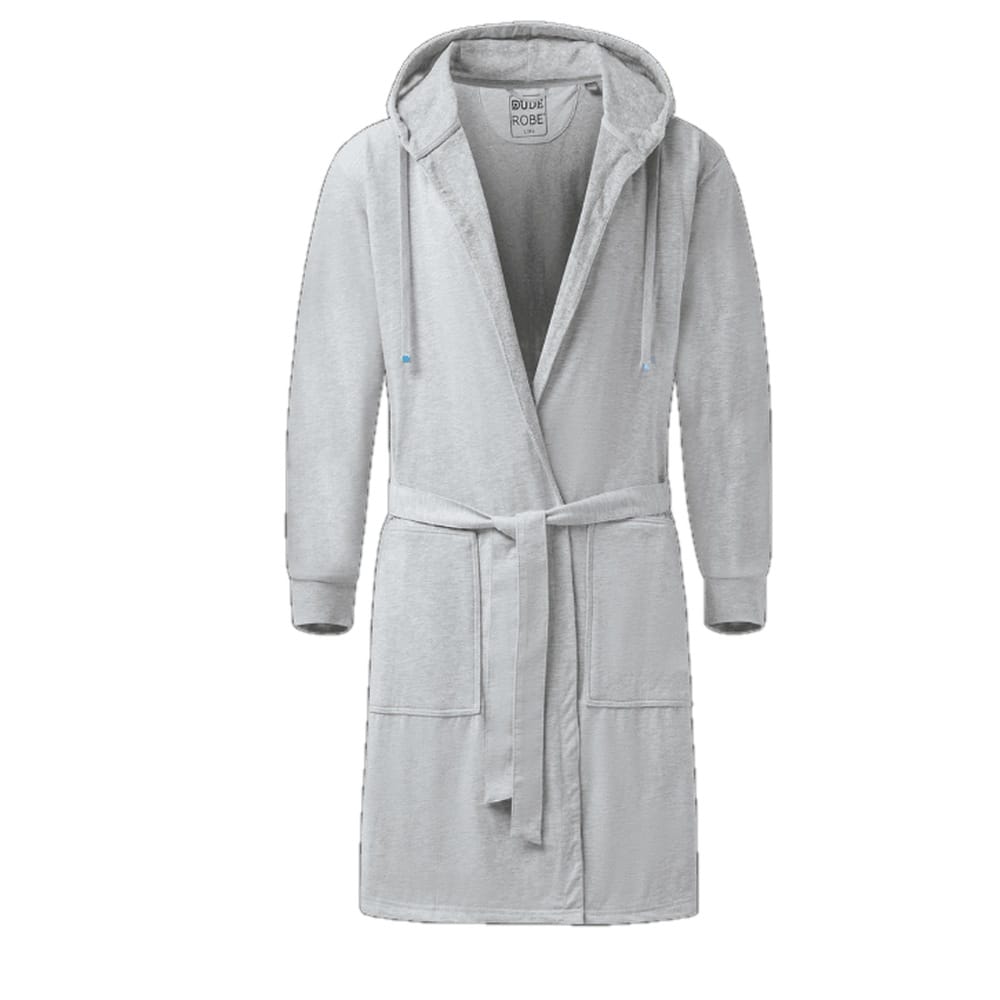
The DudeRobe
Towel on the inside, fleece on the outside, hood on top. It is the one item that dries you and insulates you in the same motion, which is the whole problem a plunge hands you.
Shop This PickFrequently Asked Questions
What do you wear to a polar plunge? A snug swimsuit, neoprene booties or water shoes, and a wool or synthetic beanie. Everything else is for afterward: a hooded robe, a dry base layer, a fleece, wool socks and insulated boots.
Should you wear a wetsuit to a polar plunge? Many organised plunges do not allow one, and for a short dip it is usually not needed. A 3mm bootie and a beanie cover the two places worth covering.
What do you wear after a polar plunge? A towel lined hooded robe first, over a wet body. Dry off underneath it, then a dry base layer, a fleece, wool socks and boots. Voited, Dryrobe and Red Equipment make comparable changing robes.
Can you wear shoes in a polar plunge? Yes, and you should. Booties or water shoes keep your soles off ice and gravel and grip a wet ramp. Bare feet are how people cut themselves and lose heat before they are even in.
How cold is too cold for a polar plunge? The water is near freezing either way, so air temperature and wind decide it. Below about 20F with wind, the rewarm is the risk rather than the dip.
Related Guides
- What to Wear Ice Fishing
- What to Wear in the Snow
- What to Wear in 20 Degree Weather
- What to Wear to Stay Warm Outside All Day
- What to Wear in Cold Weather
About the Author: Nate Calloway is a former personal stylist and outdoor gear tester based in Chicago who covers activity-specific dressing, where range of motion and standing time matter as much as the forecast. Read more from Nate.
Powered by Outfit Forecast Formulas. Forecast x Occasion x Body.


