What to Wear in 25 Degree Weather
At 25F, wear three layers: midweight merino base, 600+ fill down or synthetic puffy, and a windproof shell. Add insulated boots and wool socks. Wind chill at 15 mph drops apparent temp ~15F below the reading.

Outfit Forecast earns a commission when you buy through links on this page, at no extra cost to you. Some brands featured here are owned by the company that publishes Outfit Forecast. Affiliate disclosure
🛒 The 25 Degree Outfit Forecast Formula



At 25F, three-layer dressing is not optional. The system: midweight to heavyweight merino base on both top and bottom, a 600+ fill down jacket or expedition-weight synthetic puffy as the mid layer, and a windproof shell over everything. A 15 mph wind drops the apparent temperature from 25F to around 10F. Exposed skin on the face and ears becomes a frostbite risk inside 30 minutes at that effective temperature. Build the system correctly and you hold comfortable through two to three hours in a Chicago or Denver January. Skip one layer and you feel it in 20 minutes.
Temperature feel 25F feels like 15F with a light 10 mph breeze, and drops to 9F with 20 mph gusts. Fully layered, you can stay comfortable for 2 to 3 hours. Wind chill risk High. At 15 mph, apparent temp falls ~15F below the thermometer reading. Exposed skin on the face and ears becomes a real concern above 30 minutes. Key layer A 600+ fill down jacket or expedition-weight synthetic puffy. This is the layer that decides whether you stay warm all day. Base layer Midweight to heavyweight merino on top and bottom. Smartwool 250 or Icebreaker 260 are the field benchmarks. Avoid Cotton anywhere in the system, single-layer dressing, exposed wrists and ankles, and unlined leather gloves. Footwear Insulated leather boots for dry pavement, Sorel Caribou or Bugaboo III for snow or slush. Wool socks, always. Built for January commutes, outdoor tailgates, and 90-minute walks at 25F.
Four Outfit Formulas for 25 Degree Weather
1. The Commute Three-Layer
Top: Smartwool Merino 250 crew. Mid: Patagonia Down Sweater (800-fill) or TNF ThermoBall Eco. Outer: Wind-resistant softshell or insulated parka. Bottoms: Merino leggings under chinos or fleece-lined jeans. Shoes: Insulated leather boot (Thursday Captain, $199; Red Wing Iron Ranger, $350). Accessories: Merino beanie, fleece-lined leather gloves, merino neck gaiter.
This is the system that gets you to the office, the train, or a 40-minute walk between buildings without needing to layer up or down. The Patagonia Down Sweater runs warmer than the TNF ThermoBall at comparable fill weights because its baffle spacing is narrower, which traps more dead air per square inch. Worth knowing before you buy.
2. The Tailgate or Game Day Setup
Top: Smartwool 250 or Icebreaker 260 crew (expedition-weight). Mid: Patagonia Nano Puff Vest ($149) under a full 600-fill down jacket. Outer: Softshell or hardshell over both. Bottoms: Expedition-weight base layer under insulated snow pants or heavy cords. Shoes: Sorel Caribou ($170) or Columbia Bugaboo III ($120) with 200g+ Thinsulate. Accessories: Hand warmers in gloves, toe warmers in boots, balaclava for wind.
For standing still for 2 to 4 hours, you need the vest-under-jacket stack. Moving generates enough heat that a single mid layer works for walking, but standing loses it fast. Hand warmers make a real difference past the 90-minute mark.
3. The Date Night or Restaurant Look
Top: Fitted merino turtleneck (Uniqlo Extra Fine Merino, $40). Mid: Slim down vest under a structured wool overcoat. Outer: Tailored wool-cashmere overcoat (Banana Republic or J.Crew, $200-$350). Bottoms: Dark wool dress pants with merino thermal base underneath. Shoes: Chelsea boots with merino dress socks (sized up half for the sock thickness). Accessories: Cashmere scarf, slim leather gloves with fleece lining.
The wool overcoat reads dressy and still handles 25F when you run a base and a slim vest underneath. A common mistake is skipping the base layer to avoid bulk under the turtleneck. By the time we got from the cab to the restaurant door, I was cold. Three layers, even slim ones, make the difference.
4. The Active Outdoor Day
Top: Midweight merino long-sleeve (150-200 g/m2). Mid: Patagonia Nano Puff or Arc'teryx Atom (synthetic insulation only, not down). Outer: Softshell with vented zip pits, or hardshell if precipitation is forecast. Bottoms: Midweight merino base under softshell or ski pants. Shoes: Salomon Quest 4 GTX ($230) or Merrell Thermo Chill ($150) for trails. Yaktrax over either for ice. Accessories: Lightweight running beanie, wind-resistant gloves, merino neck gaiter.
Switch down for synthetic mid layer when you're generating heat. Down collapses when it gets damp from sweat and stops insulating. Synthetic keeps working wet. The softshell outer (rather than hardshell) is fine when there's no precipitation and dumps heat more efficiently through the vents.

Merino.tech Men's Merino Wool Base Layer
100% merino in midweight cut. Insulates when damp, soft against skin. The first piece to put on at 25F under any mid or outer layer.
Shop This PickDo This, Skip That
Do This
Run all three layers every time. Not two of three. Base, mid, and shell together trap enough air to hold you at 25F; any two of the three falls short.
Cover wrists and ankles. Gaps at the cuffs and sock line let cold air in and drop your core comfort faster than losing the entire outer layer.
Pre-warm boots before a long outdoor day. Five minutes near a heat vent before putting them on makes a measurable difference on the first hour outside.
Use merino on both top and bottom. People often do the base layer on top and skip the bottom. Legs lose heat through jeans below 30F, and once they're cold you feel it in your whole body.
Pick boots rated below -20F for any day with snow on the ground. A 200g Thinsulate rating is the minimum. The Sorel Caribou and Columbia Bugaboo III both pass this bar under $200.
Carry hand warmers in a pocket, not in your gloves. Use them on the first 10 minutes outside before your core circulation catches up. Once you're warm you rarely need them again.
Skip That
Skip the cotton hoodie as a mid layer. Cotton soaks up sweat, holds the moisture, and turns into a cold compress as soon as you slow down or go inside and back out. Polyester fleece at the same price does the job better.
Skip unlined leather gloves. They look good and insulate almost nothing below 35F. Fleece-lined leather gloves or insulated synthetic gloves do the same job without the fashion tax on your fingers.
Skip standard sneakers for a snow day. Even waterproof running shoes don't have the insulation rating to keep feet comfortable past 30 minutes in sub-freezing temps. The rubber compound also gets brittle and loses grip.
Skip the oversized puffer as your only layer. A huge puffer with no shell over it loses its insulation to wind convection. The shell is what keeps the down's loft from getting stripped away at 15+ mph.
Skip synthetic base layers for all-day wear. Polyester base layers wick well but smell by midday. Merino handles 2 to 3 days without washing and keeps you comfortable through a long commute or a travel day.
Skip the neck gaiter on casual outings if you want, but don't skip it for any outdoor standing scenario. The neck loses heat fast. A buff costs $15 and takes up zero space in a pocket.
Best Footwear for 25 Degree Weather
Insulated leather boots are the right call for dry pavement and dressier situations. Thursday Captain ($199), Red Wing Iron Ranger ($350), or Blundstone 550 ($210) sized up a half for thick wool socks. These work for the office-to-lunch commute, not the all-day outdoor slog.
Insulated snow boots belong on any day with snow, slush, or sleet in the forecast. Sorel Caribou ($170) is the standard: removable felt liner, vulcanized rubber shell, rated to -40F. Columbia Bugaboo III ($120) is the budget version and handles everything up to 6 inches of snow without issue. Look for at least 200g of Thinsulate and a comfort-rated temperature below -20F.
Hiking and outdoor boots add traction for snowy or icy trails. Salomon Quest 4 GTX ($230) and Merrell Thermo Chill ($150) are both popular winter boots. Add Yaktrax or microspikes for actual ice. Without them, even the best traction boot slips on a frozen sidewalk.
Avoid: Standard sneakers and uninsulated leather dress shoes. Nike Air Max, Allen Edmonds dress oxfords, canvas Chuck Taylors. Sneakers get cold and wet fast, and uninsulated leather conducts cold straight to the foot. No amount of wool socks fixes an uninsulated boot at 25F.

Sorel Caribou Snow Boot
Removable felt liner, vulcanized rubber shell, rated to -40F. Sized true to size with thick wool socks. The default snow boot at 25F.
Shop This Pick5 Mistakes People Make at 25 Degrees
1. Wearing one thick coat instead of three layers. A heavy wool overcoat or single expedition puffer will hold you for 15 to 20 minutes, then either overheats indoors or gives up in the wind. Three thinner layers trap more still air, regulate temperature better, and let you remove one piece when you go inside. Fix: base, mid, shell, always.
2. Skipping the lower-body base layer. Legs lose heat through jeans in still air below 30F. A 15-minute outdoor wait at a bus stop in jeans with no base layer will make your whole body feel cold, even if your torso system is perfect. Fix: merino leggings or synthetic long underwear under your pants every day below 30F.
3. Leaving wrists, ankles, and neck exposed. Layers gap at the cuffs, sock line, and collar. Cold air funnels in and makes you feel underdressed even when your core is warm. Fix: fitted cuffs on the gloves that overlap your jacket sleeves, crew socks above the ankle bone, and a buff or neck gaiter for any outdoor time longer than 10 minutes.
4. Picking the wrong gloves. Unlined leather is fashion, not insulation. At 25F it does almost nothing for heat retention. Fix: fleece-lined leather gloves for daily use ($30 to $60), insulated synthetic gloves for active days, or wool-lined mittens for standing still for hours. Touchscreen fingertips are now standard, so there's no excuse for taking gloves off to check your phone.
5. Relying on cotton anywhere in the system. Cotton soaks up sweat, holds the water, and loses all insulation when damp. The classic cotton hoodie under a winter jacket turns into a cold compress once you stop moving. Fix: merino, polyester fleece, or synthetic fill on every layer in contact with skin or sweat. No exceptions at this temperature.
Why the Three-Layer System Works at 25 Degrees
The math is direct. A merino base layer at 250 g/m2 adds roughly 4 to 8F of effective insulation depending on fit. A 600-fill down jacket adds 15 to 25F depending on fill weight and baffle construction. A windproof shell stops the convective heat loss that would otherwise strip warmth from the down layer at 15+ mph. Stacked together, the system delivers 30 to 40F of effective insulation above ambient, which is exactly what you need to make 25F feel comfortable at skin level.
Three layers beats one thick coat because air is the actual insulator, not fabric. Down, fleece, and merino all work by trapping still air between fibers. A single dense fabric has less trapped air than three loftier layers combined. It also can't be adjusted: removing a vest or unzipping a softshell takes 5 seconds; your only coat is either on or off.
The base layer is the most important piece because it manages moisture. Sweat at 25F is the fastest path to hypothermia in an unprepared system. Merino wicks moisture away from skin and continues to insulate when damp. Cotton soaks up sweat and loses its thermal value to zero. If you upgrade one piece this winter, upgrade the base layer.
⭐ Jordan's Pick
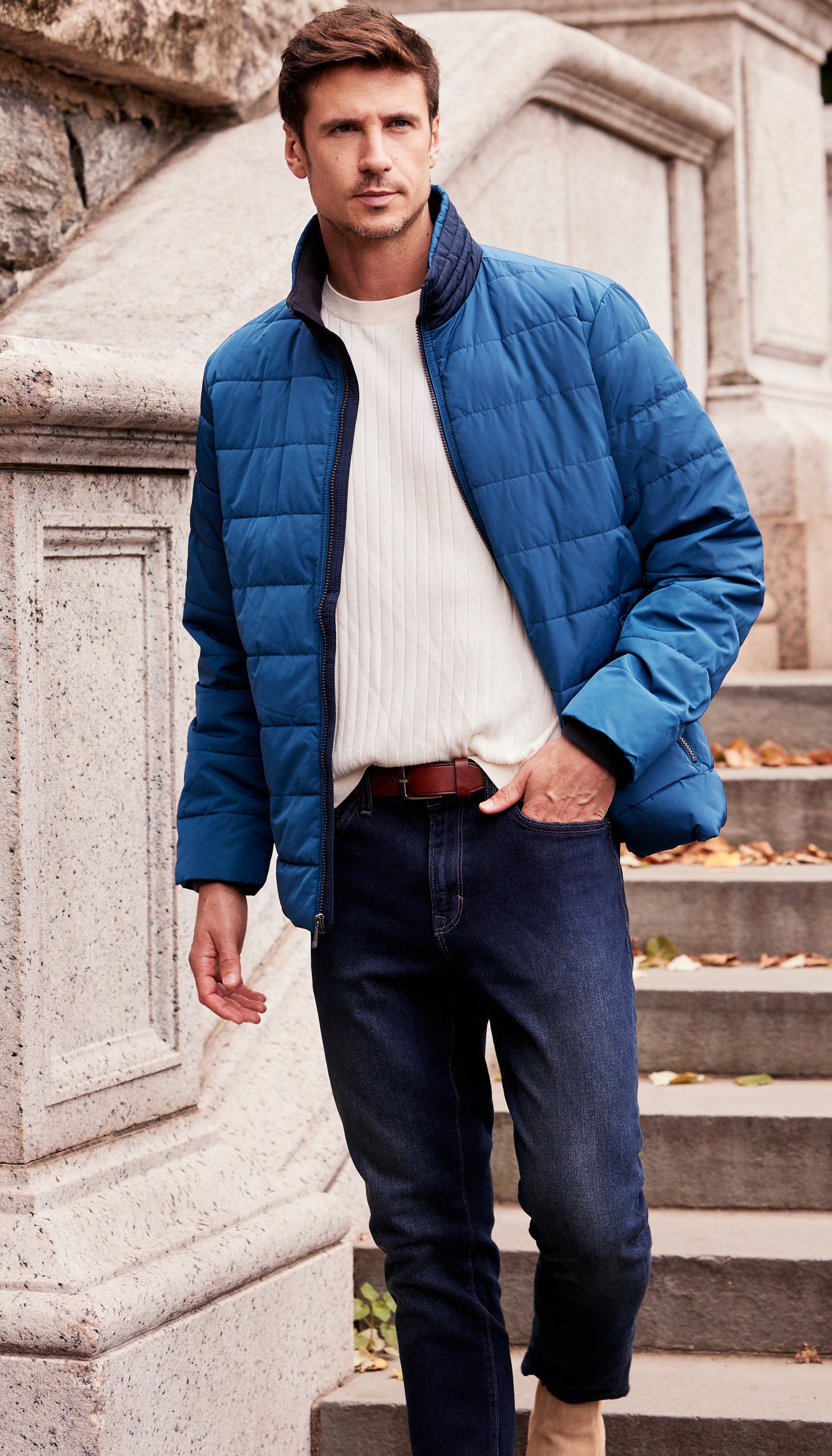
Weatherproof Garment Co. Puffer Jacket
My pick at 25F. The fill weight and cut layer cleanly under a shell without the boxy profile you get from most expedition puffers. A single insulated jacket is often not enough in a Chicago January. The Weatherproof Garment Co. piece runs noticeably warmer at similar fill weight because of the closer baffle construction.
Shop This PickFrequently Asked Questions
Is 25 degree weather dangerous?
Not for a properly dressed healthy adult. 25F is standard winter territory and is manageable for several hours when you run three layers and cover exposed skin. The real risk is wind: at 15 mph, the apparent temperature at 25F drops to about 10F. Frostbite on exposed fingers and cheeks can develop in under 30 minutes at that effective temperature.
Can I wear jeans in 25 degree weather?
Yes, but only with a merino or synthetic thermal base layer underneath. Plain denim is a poor insulator and loses most of its R-value once damp from snow or sweat. Fleece-lined jeans (Wrangler ATG at $35 or L.L.Bean Flannel-Lined at $70) perform better. For more than an hour outside, softshell pants over a midweight base layer outperform any jeans.
What is the difference between dressing for 25 degrees versus 30 degrees?
At 30F, a medium-weight insulated jacket over a base layer covers a few hours outside. At 25F you need a heavier mid layer (600+ fill down or expedition-weight synthetic), base layers on both upper and lower body, and gloves and a beanie you might skip at 30. The five-degree gap also pushes wind chill into genuinely dangerous territory faster.
Do I need snow boots at 25 degrees?
Only if there is snow or ice on the ground, or if you are standing still outside for more than 30 minutes. For dry pavement, an insulated leather boot like the Thursday Captain or Columbia Bugaboo III is enough. For slush or accumulated snow, a proper insulated snow boot like the Sorel Caribou keeps feet warm and dry.
What fabrics should I wear at 25 degrees?
Merino wool for the base (insulates when damp, resists odor through multiple wears), down or synthetic fill for the mid layer (600+ fill power down for warmth-to-weight, synthetic for wet conditions), and a tightly woven softshell or hardshell for the outer. Cotton anywhere in the system is a problem: it loses all insulation when wet and is the fastest path to feeling cold.
How do I stay warm at 25 degrees without looking bulky?
Use a thin but high-fill-power down layer rather than a thick low-fill puffer. The Patagonia Down Sweater at 800-fill packs to the size of a water bottle but adds 15 to 20F of warmth. Fitted merino base layers add zero visual bulk. A tailored wool overcoat or structured shell over a slim down vest reads as one layer even though it is three.
Related Guides
- What to Wear in 20 Degree Weather - Five degrees colder. Adds a heavier vest layer and switches to expedition-weight base layers.
- What to Wear in 30 Degree Weather - The warmer end of this temperature corridor. A lighter mid layer usually handles it.
- What to Wear in 40 Degree Weather - Above freezing, which changes the footwear and outer layer completely.
- How Do I Dress When the Temperature Swings 30 Degrees in a Day - Layering strategy for days that start at 20F and end at 50F.
- What to Wear Running in 30 Degree Weather - Active version of similar cold. Different layer strategy when you're generating heat.
About the Author: Jordan Ellery writes about cold-weather layering systems, drawing on published fabric specs and weather data. Read more from Jordan.
Powered by Outfit Forecast Formulas. Forecast x Occasion x Body.
Last reviewed: July 2026